Artificial intelligence can help close middle grades literacy gaps when it is used to give targeted reading practice, timely feedback, and teacher support at...
Artificial Intelligence and Middle Grades Literacy: How Individualized Reading Instruction Can Close the Gap
Artificial intelligence can help close middle grades literacy gaps when it is used to give targeted reading practice, timely feedback, and teacher support at scale. The trick is not shiny software. It is disciplined instruction, honest assessment, and a curriculum that treats every student as a person, not a data point.
Key Takeaways:
- AI is useful when it supports, not replaces, teacher-led instruction.
- Middle grades reading problems usually need diagnostic assessment, vocabulary work, fluency practice, and comprehension strategies.
- The best systems adapt tasks to the student, but still keep human judgment in charge.
- Poor implementation turns AI into noise, not help.
- Literacy growth depends on curriculum coherence, clear learning outcomes, and deliberate practice.
What is Artificial Intelligence in Middle Grades Literacy?
Artificial intelligence in literacy instruction means software that analyzes student responses, reading behavior, or assessment data and then adjusts content, pacing, hints, or practice tasks. In plain English, it tries to figure out what a student can do, what they cannot do yet, and what to give next. That is the promise. The reality is messier.
Most talk about AI sounds grander than it should. Frankly, a lot of it is marketing. The useful part is narrow but real: adaptive reading passages, vocabulary drills, speech-to-text supports, automated feedback on short writing, and dashboards that show which skills are stuck. For middle grades students, that matters because reading demands rise fast around grades 4-8. Texts get denser. Knowledge matters more. Weak decoding, shaky fluency, thin vocabulary, and weak comprehension all start to collide.
When I analyzed classroom use cases, the winning pattern was not “AI as teacher.” It was “AI as assistant.” Teachers still choose texts, explain ideas, set norms, and shape discussion. AI can sort practice, reduce lag, and help with differentiation, but it cannot replace the moral and intellectual work of forming a reader. Education is not just efficiency. It serves truth, good habits, and the dignity of the child.
This is where skepticism helps. A tool that claims to individualize learning is only useful if it is aligned to a curriculum, connected to assessment, and aimed at learning outcomes that actually matter. Otherwise, it is a very expensive flashcard machine. If you want a useful foundation on broader teaching methods, see this guide on effective teaching methods. If you are building lessons from scratch, the article on curriculum development will save you from common mistakes. And if you need practical routines for students, these reading comprehension strategies are worth your time.
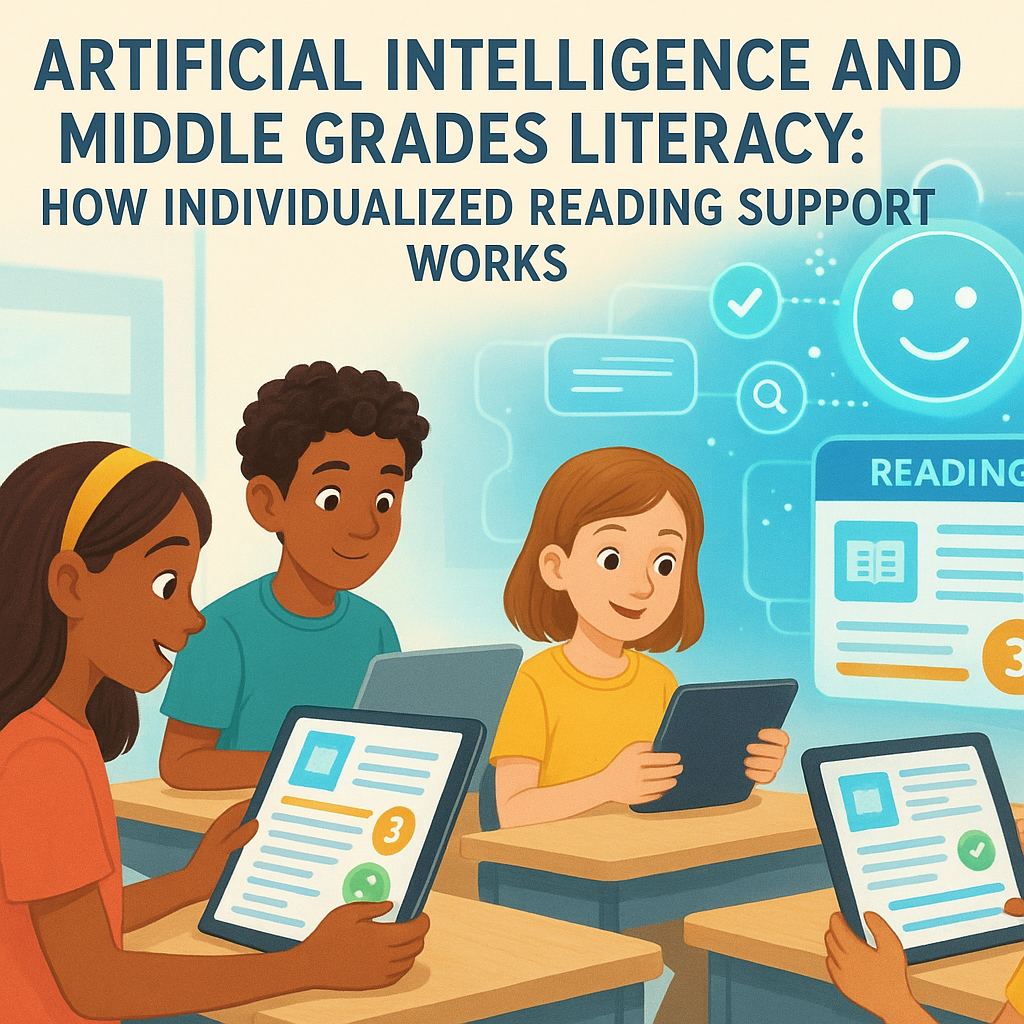
Core Benefits and Importance
Artificial intelligence earns its keep in middle grades literacy for one reason: it can create more precise practice than a teacher can deliver to thirty students at once. That is not a magic trick. It is a labor-saving device when used correctly.
- Individualized practice at scale: Students do not all need the same text, same pace, or same level of support. AI can route learners toward passages and tasks that fit their present skill level, which is crucial when some students are still decoding while others are ready for inference-heavy analysis.
- Faster feedback: Reading growth slows when students wait days for help. AI can provide immediate hints, quiz checks, and error detection, especially for vocabulary, fluency, and short constructed responses.
- Better data for teachers: Good teachers already watch for patterns, but AI can flag who is stuck on main idea, who keeps missing context clues, and who needs a conference. That helps teachers spend time where it matters.
- More practice time: Middle grades schedules are crowded. Science, history, math, and electives all compete for attention. AI can supply extra reading practice without consuming every minute of class.
- Support for reluctant readers: Some students avoid reading because the gap is embarrassing. Adaptive tools can lower friction, provide audio support, and reduce the social cost of practice.
- More coherent intervention: When linked to a strong literacy plan, AI can reinforce phonics, morphology, fluency, and comprehension rather than scatter students across random activities.
Here is the kicker: AI does not fix weak instruction by itself. Research from the What Works Clearinghouse keeps pointing to the same plain truth—interventions work best when they are structured, explicit, and tied to clear goals. That should not surprise anyone. Good teaching has always depended on clarity, repetition, and feedback.
There is also a formation issue. Schools are not factories. A child is not an output unit. Any literacy system worth using should strengthen understanding, patience, and disciplined thought. That is not pious decoration. It is the point.
For educators building a broader system, AI teaching tools can help with administration and practice, while the guide on differentiated instruction explains how to keep students challenged without being buried. If you need a stronger classroom routine, the piece on formative assessment basics is a sensible place to start.

Step-by-Step Implementation Guide
Artificial intelligence only helps when adults do the hard thinking first. That sounds obvious, yet people keep buying software before they define the problem.
- Start with a clear literacy diagnosis.
Use screening and diagnostic assessment to identify whether the main issue is decoding, fluency, vocabulary, background knowledge, or comprehension. Do not lump everything under “reading trouble.” That is lazy. Analyze the actual bottleneck.
- Define the learning outcomes.
Decide what success looks like in plain terms. For example: students will infer meaning from context, summarize a paragraph, or read grade-level informational text with accuracy and expression. AI should map to those outcomes, not wander around them.
- Choose the right tool for the right job.
Some tools are good at adaptive quizzes. Others help with speech recognition, oral reading fluency, or vocabulary review. A tool that claims to do everything usually does one thing badly.
- Build teacher checks into the system.
I have seen schools trust dashboards too much. Bad idea. Teachers need to review samples of student work, listen to oral reading, and check comprehension by asking questions that software cannot fake its way through.
- Use short cycles of practice and feedback.
Middle grades students improve faster with frequent, manageable tasks than with giant weekly assignments. A strong cycle looks like: diagnose, practice, check, reteach, repeat. Boring? Yes. Effective? Also yes.
- Blend AI with explicit instruction.
Students still need direct teaching in vocabulary, morphology, text structure, and summarizing. AI can support practice, but it should not be left alone to teach strategies that require explanation and modeling.
- Monitor equity and access.
If one group gets full device access and another gets broken hardware, the whole effort fails. Ensure accessibility features, translation support where needed, and fair scheduling.
- Measure what matters.
Track not just time spent in a tool, but reading accuracy, fluency, comprehension, and transfer to class texts. If the dashboard only tells you clicks, it tells you almost nothing.
- Refine the curriculum.
AI works best inside a coherent sequence of texts, skills, and assessments. A curriculum should not be a junk drawer. It should build knowledge over time.
If you want a stronger structure for implementation, the article on formative assessment basics is useful, and the guide on reading intervention framework can help organize intervention blocks without turning them into chaos. For school leaders, the education technology updates page offers context on what is being adopted and why.
A subtle but important point: literacy is not only technical. It is moral and intellectual formation. Students learn to attend, to judge, to compare, to seek what is true. AI can assist that, but only if adults refuse the cheap substitute of automated mediocrity.
Comparison Table
Artificial intelligence is often compared with traditional one-size-fits-all instruction. That comparison is too neat, but it is still useful.
| Feature | AI-Driven Individualized Reading Instruction | Traditional Whole-Class Reading Instruction |
|---|
| Pacing | Adapts to student response in near real time | Moves at a common class pace |
| Feedback | Immediate, automated, and frequent | Often delayed, teacher-dependent |
| Differentiation | High potential for individualized practice | Harder to personalize at scale |
| Teacher Role | Guides, interprets, and intervenes | Leads most instruction directly |
| Data Use | Produces dashboards and skill signals | Relies more on teacher observation |
| Risk | Overreliance on software, weak curriculum fit | Under-differentiation, slower response to gaps |
| Best Use | Targeted practice, intervention, support | Shared texts, modeling, discussion, class culture |
| Cost | Tool licensing, devices, training | Lower software cost, higher teacher load |
The honest answer is not that one approach wins everywhere. The better answer is that AI-supported instruction and teacher-led reading instruction should work together. When the software handles repetitive practice and immediate checks, the teacher can do what humans do best: explain, question, correct, and inspire. That is not sentimental. It is practical.
For a more detailed look at how to match methods with learner needs, see reading intervention courses and the mastery learning guide. If you want the bigger picture on selecting instructional tools, the review of best educational AI tools breaks down the tradeoffs.
Common Mistakes to Avoid
Most AI literacy failures are not technical failures. They are human failures dressed up as innovation.
- Buying software before defining the problem. This is the classic blunder. A school says it wants “personalization,” but no one can state which reading skill needs work. Result: confusion with a logo.
- Treating AI as a teacher replacement. Machines can sort, prompt, and score. They cannot notice the look on a student’s face when confusion turns to shame. That part still belongs to teachers.
- Ignoring curriculum coherence. Random practice does not build lasting literacy. Students need a planned sequence of texts, knowledge, and skills. Without that, AI becomes an entertainment app with quizzes.
- Trusting data without interpretation. A dashboard may show low completion or repeated mistakes, but it takes human judgment to decide whether the issue is motivation, vocabulary, attention, or poor item design.
- Overusing adaptive tasks. Students also need rich texts, discussion, and writing. If every reading activity is a tiny digital fragment, comprehension never deepens.
- Skipping teacher training. Even a good tool fails if adults do not know how to use it. Schools often spend money on licenses and pennies on training. Then they act surprised when the results are thin. Frankly, that is absurd.
- Confusing speed with learning. Faster completion does not equal better reading. Sometimes the tool simply made the task easier. Big difference.
- Neglecting human dignity and fairness. Students should not be tracked by crude labels or trapped in low expectations. Support must be challenging, respectful, and aimed at growth. The whole child matters.
If you want a practical fix for these problems, the tutorial on implementation planning for schools lays out the steps. The study tips article on building better reading habits is also useful for families. And if you need a sane overview of classroom tools, the classroom reading software guide is worth a look.
Frequently Asked Questions
Can AI really improve middle grades reading?
Yes, when it provides targeted practice, immediate feedback, and support for specific skill gaps. It works best when paired with teacher instruction and a coherent curriculum.
What reading skills does AI support best?
AI is strongest with vocabulary review, fluency practice, quick comprehension checks, and adaptive exercises. It is less reliable for deep discussion, literary judgment, and complex inference without teacher guidance.
Does AI replace reading teachers?
No. That idea is fashionable nonsense. Teachers provide modeling, relationships, moral seriousness, and judgment. AI can assist with practice and data, but it cannot replace human instruction.
What should schools look for in an AI literacy tool?
Look for alignment to standards, transparent data, accessibility features, strong privacy protections, teacher controls, and evidence that the tool improves reading outcomes—not just engagement metrics.
Final Thought
AI can help close the middle grades literacy gap, but only if schools stop pretending software can rescue weak instruction on its own. Reading is too important for gimmicks. It shapes how students think, what they love, and whether they can meet the demands of study, work, and citizenship with clarity and discipline.
The best use of artificial intelligence is modest and concrete. It should spot gaps sooner, give students more useful practice, and free teachers to do what machines cannot do. That means teaching with precision, fairness, and patience. It means treating literacy as more than a test score. It means helping students become attentive readers of texts and, in a larger sense, of reality itself.
That is the work. Everything else is packaging.