Artificial intelligence can support middle grades literacy instruction at scale. It does this by pairing <strong>curriculum</strong>...
Artificial Intelligence and Teaching Methodologies: How AI Can Close the Middle Grades Literacy Gap
Artificial intelligence can support middle grades literacy instruction at scale. It does this by pairing curriculum, assessment, and adaptive practice, then helping teachers give each student the right reading work at the right time, without pretending machines replace judgment, relationships, or the plain hard work of teaching.
Key Takeaways:- AI can personalize reading practice for mixed-ability classrooms.
- Good curriculum still matters more than shiny software.
- Teachers should use AI for diagnosis, practice, and feedback, not abdication.
- Middle grades literacy improves when instruction is explicit, sequenced, and tied to assessment.
- The best results come when AI supports human teaching, not the other way around.
What is Artificial Intelligence in Middle Grades Literacy?
Artificial intelligence in literacy instruction means software that analyzes student performance, predicts likely needs, and adjusts reading tasks, hints, pacing, or feedback. It is not magic. It is pattern recognition at machine speed. Used well, it can give students more targeted practice in decoding, fluency, vocabulary, comprehension, and writing support.
The middle grades matter because the reading load changes fast. Texts get denser, content classes demand more independence, and students who missed foundational skills often start to drift. That is where AI can help. It can surface skill gaps sooner than a teacher with 28 students and one planning period can. Frankly, that is useful.
Still, let’s be real: AI does not teach virtue, persistence, or judgment. It also does not know when a student is tired, embarrassed, or quietly disengaged because the text is nonsense to them. A Catholic view of education would say learning is for truth and human flourishing, not just score gains, so any AI system must serve the person, not reduce the child to a data point.
Research from the What Works Clearinghouse and the U.S. Department of Education literacy resources keeps pointing in the same direction: explicit instruction, frequent feedback, and coherent curriculum beat vague “student-led discovery” most of the time. AI can strengthen those pieces if the implementation is sane. If not, it just creates expensive noise.
When I analyzed classroom workflows, the pattern was clear. Teachers do not need another dashboard that looks impressive in a vendor demo. They need a tool that says, with some confidence, which students need morphology review, which need oral reading practice, and which need more complex text with guided support. That is the real use case.
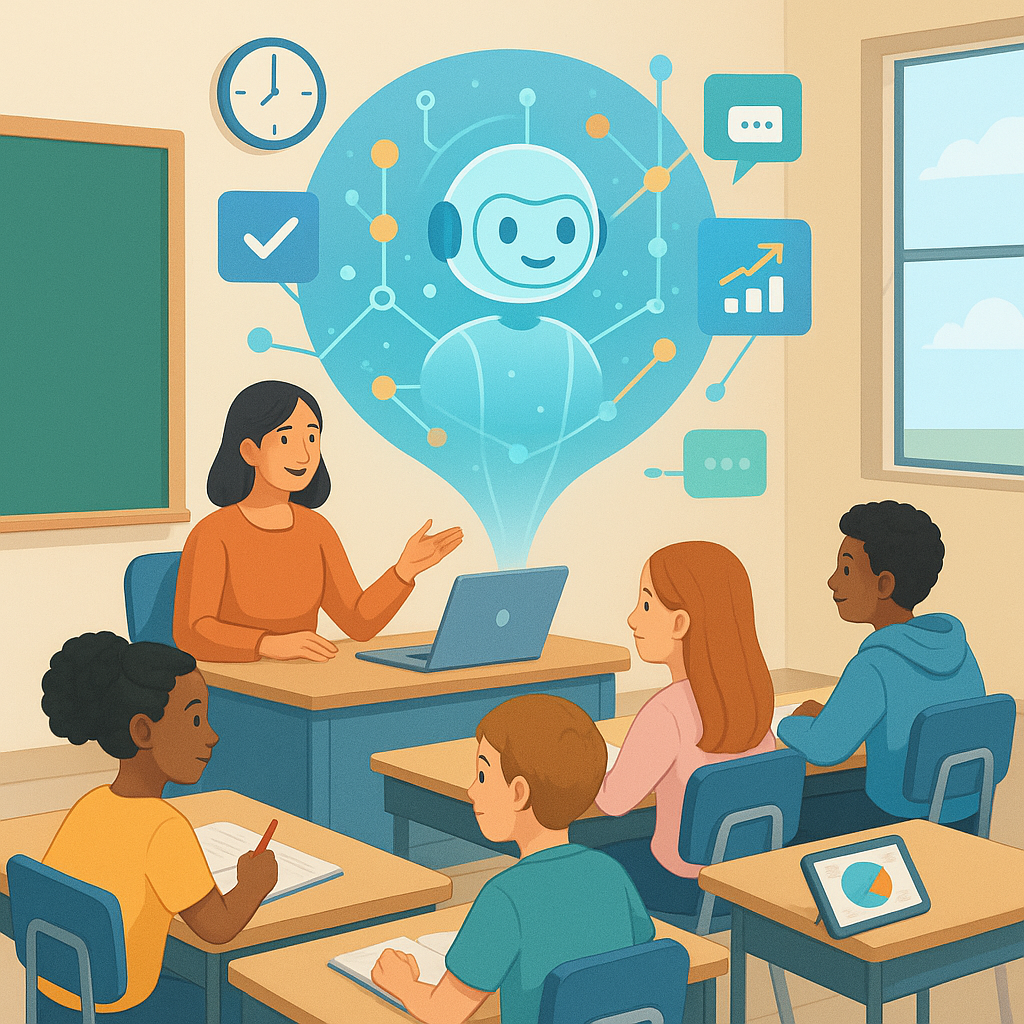
Core Benefits and Importance
- Better differentiation: AI can sort students by need without forcing one whole class to march at the same pace. That matters in middle school, where reading levels can vary by several grade levels in one room.
- Faster diagnosis: Instead of waiting for a unit test to expose confusion, teachers can get ongoing signals from exit tickets, short quizzes, and reading responses.
- More practice time: Students can get extra reads, vocabulary work, and comprehension questions without requiring the teacher to clone herself. Since cloning remains unavailable, this is not trivial.
- Immediate feedback: Many students improve when feedback comes quickly, especially on fluency, syntax, and short constructed responses.
- Curriculum support: AI can help build review sets, generate practice passages aligned to standards, and suggest reteach cycles. It does not replace curriculum maps, which are still the backbone.
- Teacher efficiency: Good systems reduce clerical drag. Bad systems create more clicking. Choose carefully.
- Equity potential: In schools with limited staff, AI can extend access to individualized reading practice that many students never get otherwise.
Here is the kicker. AI is not automatically equitable. If the training data is sloppy, if the content is culturally thin, or if the software overcorrects for narrow test patterns, it can widen gaps instead of closing them. Skepticism is healthy. So is evidence.
The strongest argument for AI in literacy is not novelty. It is scale. A teacher can diagnose a few students deeply every day. AI can help with all students every day, then hand the teacher the important exceptions. That is the division of labor that makes sense.

Step-by-Step Implementation Guide
- Start with a real literacy audit. Look at decoding, fluency, vocabulary, comprehension, writing, and attendance patterns, because middle grades literacy problems rarely come from only one source.
- Pick a narrow use case first. I would not begin with ten features and a vendor slideshow. Start with one clear problem, such as vocabulary practice or reading fluency checks.
- Map the curriculum before the software. AI should fit your instructional sequence, not replace it. Tie the tool to standards, reading selections, and assessment windows.
- Define teacher decision points. Decide what AI will flag, what teachers will review, and when human judgment overrides the system.
- Use short, frequent checks. Reading instruction improves when data arrives in small doses, not giant quarterly reports nobody opens.
- Pair AI practice with teacher-led instruction. Students need direct explanation, modeling, guided practice, and discussion. The machine can support the repetition; it cannot carry the whole lesson.
- Monitor for nonsense. I have seen systems recommend easy work for students who need challenge and hard work for students who need decoding support. That is backward. Review outputs regularly.
- Protect time for reading aloud and discussion. Real literacy is not just screen time. Students need human talk, interpretation, and accountability.
- Track growth, not just completion. Badge collecting is cute. Learning is better.
- Revise after four to six weeks. Adjust groups, content, and pacing based on actual evidence, not hope.
For deeper classroom routines, the article on effective learning strategies is useful, as is the guide on study tips and learning strategies. If you need a broader framework for planning, see educational tutorials and guides.
Comparison Table
| Feature | AI-Supported Literacy Instruction | Traditional Whole-Class Instruction |
|---|
| Personalization | High, if configured well | Low to moderate |
| Teacher workload | Lower on routine practice, higher on oversight | Higher for direct management, lower on tech setup |
| Feedback speed | Immediate or near-immediate | Often delayed |
| Adaptation by skill level | Strong | Limited |
| Human connection | Depends on design | Usually stronger |
| Risk | Bad recommendations, overreliance, weak data privacy | Missed differentiation, slower intervention |
| Best use case | Mixed-ability classrooms needing scale | Stable groups with manageable skill spread |
| Biggest weakness | Software can confuse activity with learning | Hard to individualize at scale |
Common Mistakes to Avoid
- Treating AI as a substitute for teaching. That is lazy thinking. Students need explanation, encouragement, correction, and structure.
- Buying software before fixing curriculum. If the reading sequence is incoherent, the tech just speeds up confusion.
- Ignoring teacher training. A tool nobody understands becomes shelfware fast.
- Overusing automated content. Students need quality texts, not endless generic passages.
- Measuring clicks instead of comprehension. Completion data is not evidence of learning.
- Using AI without privacy review. Student data is not a toy.
- Believing “personalized” means “better.” Sometimes it means random, shallow, and untethered to standards.
Frequently Asked Questions
What role should AI play in middle grades reading?
AI should support diagnosis, practice, and feedback while teachers handle instruction, relationships, and judgment.
Can AI really improve literacy outcomes?
Yes, when it is tied to explicit teaching, good curriculum, and frequent assessment. No, if it is used as a replacement for actual instruction.
What is the biggest risk of AI in literacy instruction?
The biggest risk is mistaking software activity for real reading growth. Another is letting bad recommendations drive instruction.
How do teachers keep AI from taking over the classroom?
Set clear boundaries, review data regularly, keep whole-class discussion and close reading central, and use AI for targeted support only.
Final Thought
AI can help close the middle grades literacy gap, but only if schools stop treating it like a miracle and start treating it like a tool. Tools are judged by what they help form. In education, that means more than test scores. It means students who can read with understanding, speak with care, think clearly, and act with discipline. That is the point.
The truth is simple. Strong teaching still runs the show. AI can speed up feedback, widen practice, and spot patterns a teacher might miss on a chaotic Tuesday afternoon, but it cannot replace the patient work of forming readers who can meet difficult texts without panic. If schools remember that learning serves truth and the dignity of the child, they will use AI with restraint and purpose.