Can High-Impact Tutoring Survive Post-Pandemic Funding Loss?
High-impact tutoring can survive funding cuts, but not by pretending that every tutoring program is equally effective. The strongest programs protect frequent, small-group instruction with trained tutors, strong curriculum links, reliable attendance, and regular checks on student progress. Districts that trim those ingredients may keep the label while losing the results.
Tutoring became a familiar part of pandemic recovery plans because students had missed instruction and schools needed practical ways to help them catch up. Emergency funding made it possible to hire tutors, organize small groups, and build programs at speed. But those dollars were temporary. As budgets tighten, district leaders face a blunt question: which parts of tutoring are worth keeping, and which were only affordable while relief funding lasted?
The answer is not simply to preserve every program unchanged. Nor is it to treat tutoring as a short-lived repair job that can be abandoned once a grant ends. I analyzed the design principles emphasized by tutoring researchers and implementation organizations: the evidence points toward protecting the features that make tutoring intensive and instructionally useful, while scaling back the parts that add cost without helping students learn. That distinction matters to families, teachers, and taxpayers alike.
What Is High-Impact Tutoring?
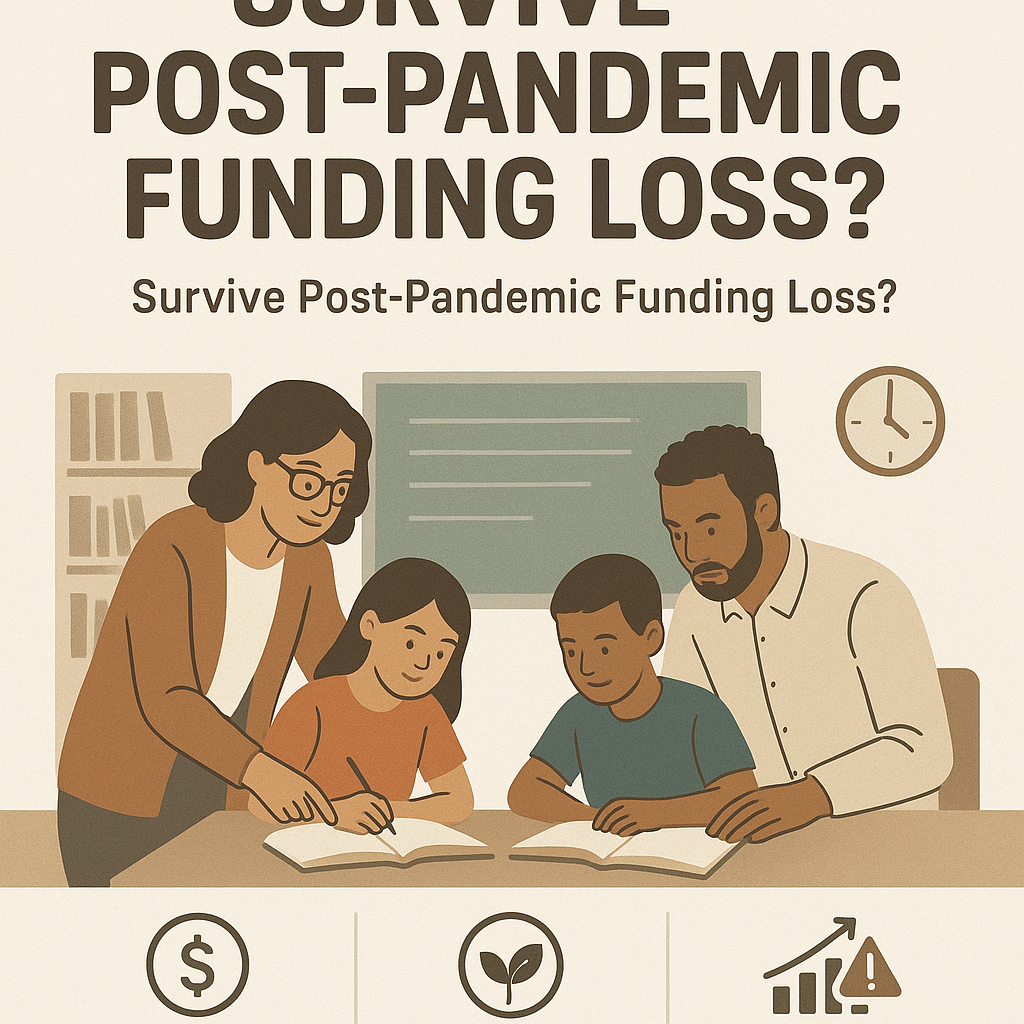
High-impact tutoring is frequent, sustained, small-group or one-to-one instruction that follows students’ classroom curriculum and responds to their learning needs. It is usually scheduled during the school day or attached to the regular school program, rather than left entirely to families to arrange. Students meet with a consistent tutor multiple times each week, often in groups of one to four, over a meaningful period. Exact definitions differ, but frequency, consistency, instructional quality, and alignment are recurring features.
That definition separates high-impact tutoring from many things schools also call tutoring. A volunteer who visits once a month may be a welcome mentor, but that is not the same intervention. An online homework platform can offer practice, but it does not automatically provide a trusted adult who notices confusion, changes the explanation, and checks whether the student can use the idea independently. Nor does a brief test-prep session, by itself, become high-impact because its marketing says so.
The distinction is worth guarding. I have reviewed enough program descriptions to be wary when the word high-impact appears without details about frequency, group size, tutor preparation, lesson materials, and student attendance. Labels do not teach children. Instruction does.
Tutoring draws on Pedagogy, Curriculum, Assessment, Student Engagement, and Learning Outcomes. A tutor needs to know what students are expected to learn, identify the specific gap blocking progress, teach it clearly, and provide practice that reveals whether the student understands. Teachers and tutors should share information, or tutoring can become a disconnected second curriculum that confuses students and wastes time.
There is a strong research base for tutoring as an intervention, though results vary. A widely cited meta-analysis by Nickow, Oreopoulos, and Quan examined randomized evaluations and found positive average effects, with stronger results often associated with programs delivered during school, by teachers or paraprofessionals, and in earlier grades. That is not a promise that any district’s program will produce the same effect. Context and implementation count. The review is available through the National Bureau of Economic Research.
The National Student Support Accelerator describes high-impact tutoring as tutoring that is consistent, relationship-based, aligned to classroom content, and delivered by well-supported tutors. Its high-impact tutoring guidance is useful because it treats program design as more than a hiring problem. Schools need training, schedules, materials, supervision, and data routines too. Frankly, that is where many rushed initiatives stumble.

Why It Matters—and What It Cannot Do
The chief benefit is focused instruction. In a classroom, teachers must attend to many students at once; a tutor can hear a learner explain their thinking, spot a misconception, and respond before it hardens into a habit. A small group also gives students more chances to speak, try a strategy, get feedback, and try again. That is useful in reading and mathematics, where gaps in foundational knowledge can make later lessons difficult to access.
Tutoring can also improve access to help. When schools schedule sessions during the school day, students do not need a parent with spare time, a car, or money for private lessons. That matters. A program that depends on families arranging transport after school may mostly reach children whose families already have more flexibility. If a district says it serves students with the greatest needs, it should examine who actually attends, not just who receives an invitation.
A consistent tutor can build trust and make it safer to admit confusion. This is not a sentimental extra. Students who feel able to ask questions are more likely to reveal what they do not understand, which gives the tutor something real to teach. Education concerns the whole person: knowledge matters, and so do confidence, responsibility, perseverance, and the dignity of each learner. A good program supports those qualities without confusing warm relationships with sound instruction.
Here is the kicker: tutoring is not a substitute for strong classroom teaching, a coherent Curriculum, or adequate school staffing. It cannot repair every learning gap, solve chronic absenteeism on its own, or compensate for a schedule that repeatedly pulls students away from core instruction. It is an added layer of support, not a magic patch for weak systems.
Research organizations have urged schools to treat tutoring as part of a broader academic recovery strategy and to monitor whether students receive enough sessions. The J-PAL summary of high-impact tutoring points to tutoring as a promising evidence-based approach, while also describing implementation features that matter when programs expand. A useful caution appears in the EdResearch for Recovery brief on tutoring: districts should use evidence and local information rather than assume that simply offering a program will produce results.
The benefits are strongest when the intervention is planned around a real learning need. A district should be able to explain which students are eligible, which skills the program targets, how tutors coordinate with teachers, and how progress is reviewed. If those answers are fuzzy, the program may still be well-intentioned, but its impact is difficult to establish. That is a problem when funding is limited and choices have consequences.
How to Sustain a Tutoring Program: A Step-by-Step Guide
- Start with the learning problem, not the funding source. Identify the grades, subjects, and skills where students need additional instruction. Use classroom work, diagnostic checks, attendance patterns, and teacher observations. Do not select a tutoring model first and then hunt for students to fit it. I have found that programs designed around a clear instructional need are easier to explain and evaluate than programs built around a grant requirement.
- Protect the essential features. Write down the program’s non-negotiables: sessions per week, session length, group size, tutor continuity, curriculum alignment, training, and time for coordination with teachers. If funding forces a reduction, decide openly which feature can change without undermining the intervention. Cutting session frequency may reduce costs quickly, but it can also turn sustained instruction into occasional support. A smaller number of students receiving a coherent program may be more defensible than a larger number receiving a diluted one.
- Build a budget that survives the grant. Map all costs, not just tutor wages. Include recruitment, background checks, training, lesson materials, scheduling, supervision, data systems, and substitute coverage where needed. Then identify a realistic mix of sources: district operating funds, state programs, federal funds where eligible, community partnerships, or philanthropic support. Each source has rules and risks. Do not count a hoped-for grant as recurring revenue, and do not shift costs to families if that would exclude the students most in need.
- Choose a delivery model the school can run well. Options include trained school staff, paraprofessionals, university partnerships, community organizations, and vetted tutoring providers. There is no universal winner. School staff may know the curriculum and students but need protected time. External tutors may add capacity but require close coordination and supervision. Ask providers for transparent information about tutor training, group size, attendance, lesson materials, and outcome reporting. A slick dashboard is not proof of good instruction.
- Put tutoring inside the instructional week. During-school sessions can improve attendance and access, though scheduling them well takes careful planning. Avoid repeatedly removing students from the same subject or from activities that matter to their belonging and development. Agree on a timetable with classroom teachers, tutors, and school leaders. Give tutors access to the relevant curriculum and a simple way to report what students practiced and where they struggled. Keep the routine predictable; families and students should know when sessions happen and how absences are handled.
- Train tutors and support them throughout the term. A short orientation is not enough. Tutors need a practical introduction to lesson materials, questioning, feedback, behavior support, safeguarding, and the students they will teach. They also need someone to consult when a lesson falls flat. Regular coaching and brief meetings with teachers help tutors adapt without drifting away from the curriculum. The point is not to turn every tutor into a certified teacher; it is to make sure each tutor can deliver the planned instruction responsibly and consistently.
- Make attendance a design issue. Missed sessions weaken the dose students receive. Track attendance by student, school, grade, and time slot, then investigate patterns. Is transport a barrier? Do students miss sessions because they are scheduled during a favorite class? Are reminders reaching families? Do students understand why they are attending? The answer may call for a better schedule, clearer communication, or a different group arrangement—not another motivational poster.
- Measure learning and implementation together. Assessment should answer useful questions: Are students receiving the intended number of sessions? Are tutors following the core lessons? Are students improving on targeted skills? Are teachers seeing transfer into classroom work? Combine short, curriculum-linked checks with attendance records, tutor logs, and teacher feedback. Avoid treating one test score as the whole story. Also avoid collecting data nobody has time to review. Set a calendar for looking at results and deciding what to change.
- Make a public keep, change, or stop decision. At the end of a term, report what the program cost, who it reached, how often students attended, and what evidence suggests about progress. Then decide what to preserve, improve, or end. This is not a public-relations exercise. Families deserve honest information, and school boards need enough detail to compare tutoring with other uses of limited money. If the program did not work as planned, say so and explain what the district learned.
When I analyze a tutoring plan, I look for a chain of practical decisions: need, schedule, people, instruction, attendance, evidence, and funding. If one link is missing, the program may still exist on paper, but it becomes harder to sustain and harder to defend. Start with what students need, then fund the work that can actually deliver it.
High-Impact Tutoring vs. Low-Dosage Tutoring
The closest alternative is often low-dosage tutoring: occasional or less frequent support, sometimes delivered in larger groups or with limited coordination with classroom instruction. It can be useful for a specific purpose, especially when the goal is homework help, enrichment, or short-term assistance. But it should not be sold as equivalent to an intensive model. The comparison below describes common design differences, not an iron rule; individual programs vary.
| Feature | High-impact tutoring | Low-dosage tutoring |
|---|
| Frequency | Several scheduled sessions each week is common | Often weekly, occasional, or drop-in |
| Group size | Usually one-to-one or a small group | May include larger groups or open attendance |
| Continuity | Students often work with the same tutor | Tutor or attendance may vary |
| Instruction | Aligned to classroom curriculum and identified needs | May focus on general homework or immediate questions |
| Coordination | Regular communication with teachers is built in | Coordination may be limited |
| Cost per student | Usually higher because of frequency and staffing | Often lower per student, depending on design |
| Best fit | Sustained support for specific learning gaps | Supplementary help, enrichment, or brief assistance |
The key trade-off is reach versus intensity. A district can sometimes serve more students by reducing session frequency or increasing group size. That may be sensible if the goal is a broad layer of extra support, but it changes the intervention. Calling both models high-impact muddies the evaluation and makes it harder for families to understand what students receive.
A budget comparison should include learning opportunity, not just price per seat. A lower-cost model that students rarely attend may deliver little. Conversely, an intensive model that serves too few students to address a district’s priorities may not be the right sole strategy. Leaders should compare cost per student who actually attends, cost per completed tutoring hour, staffing stability, and evidence of progress on the targeted skills. The precise measure depends on the program, but transparency matters.
Frankly, districts should stop treating scale as a simple headcount contest. A smaller pilot can reveal scheduling problems and tutor-support needs before a wider rollout. A broad program can be appropriate when it is designed carefully and monitored honestly. The question is not whether intensive tutoring is always better than every alternative. It is whether the district is clear about the service being provided and has evidence that the service meets its stated purpose.
Common Mistakes to Avoid
Mistake 1: Keeping the name but cutting the dosage. A program that meets far less often than planned may no longer resemble the model that informed its design. Changes may be unavoidable, but describe them accurately and reassess what outcomes are reasonable. Do not make a budget cut invisible by leaving the old program label on the schedule.
Mistake 2: Expanding before the first version works. Leaders understandably want to reach more students, but adding schools before tutor training, staffing, and attendance systems are stable creates predictable problems. Learn from a pilot. Check whether sessions happen, whether students show up, whether teachers can coordinate, and whether the materials fit classroom instruction. Scaling a weak process just gives it more places to fail.
Mistake 3: Assuming all tutoring is effective. This is one of the most persistent bits of optimistic advice in education. The research supports tutoring as a promising approach, not every program that uses a tutor. Tutor preparation, group size, frequency, curriculum fit, and implementation all affect what students experience. Ask for evidence about the actual model, not a general claim about tutoring.
Mistake 4: Mistaking attendance for learning. Attendance is essential, but it is not an outcome. A full room can still contain lessons that do not address students’ needs. Track whether the intended instruction occurred and whether students can apply what they practiced. At the same time, do not make the opposite error and ignore implementation when test scores are slow to move; the program may not have delivered enough sessions to make a fair judgment.
Mistake 5: Treating software as a replacement for instructional relationships. Digital tools can help schedule sessions, provide practice, and organize progress information. They cannot automatically decide which explanation a student needs or build trust. Use tools to support tutors, not to disguise a staffing shortage as innovation. Be careful with student privacy and check what information a vendor collects, stores, and shares.
Mistake 6: Ignoring teachers and families. Teachers know what students are learning in class and can help tutors connect sessions to current lessons. Families can explain attendance barriers and help students understand the purpose of the program. Consultation should be practical, not ceremonial. Ask teachers what information they need and ask families whether the schedule is workable. Then make at least some changes based on the answers.
Mistake 7: Funding the launch but not the routine. A grant can pay for materials and initial hiring, but a program also needs ongoing supervision, training, and time to review progress. If those costs have no place in the recurring budget, the district has funded a start, not a sustainable service. Build the exit plan before the grant expires. That is less exciting than a launch announcement, but more useful to students.
Mistake 8: Using an evaluation no one can act on. A dense report delivered after the budget decision is already settled does not help much. Set a few clear indicators, assign someone to review them, and choose decision dates in advance. Include students reached, attendance, dosage, instructional quality, and learning progress. If results are mixed, examine why before declaring victory or failure. The truth is usually more useful than a slogan.
Frequently Asked Questions
Is high-impact tutoring still effective after pandemic relief funding ends?
The loss of temporary funding does not change the instructional principles behind tutoring. Programs can remain useful if districts preserve frequent sessions, consistent tutors, suitable materials, and attention to student needs. But a program that loses too many essential features should not assume it will produce the same outcomes. Districts need to measure what they can sustain, explain changes clearly, and avoid promising results beyond the evidence.
How often should students receive tutoring?
Many high-impact models schedule students multiple times per week, but the right schedule depends on the intervention, students, subject, and available evidence. Frequency should be designed in advance and monitored. If a district has to reduce sessions, it should report the change and consider whether the program’s goals still make sense. A fixed number cannot guarantee impact; the quality and consistency of instruction matter too.
Who should provide tutoring?
Teachers, paraprofessionals, trained college students, community partners, and external providers can all contribute. The right choice depends on local capacity and program design. Whichever people deliver sessions need preparation, appropriate materials, supervision, and a way to coordinate with classroom teachers. School leaders should check background and safeguarding requirements and make clear who is responsible for instruction and student information.
How can a district know whether its tutoring program works?
Track both implementation and learning. Review attendance, sessions delivered, group size, tutor continuity, lesson alignment, and student progress on skills the program targets. Add teacher and student feedback where practical. Compare results with a sensible baseline and consider which students are not being reached. No single metric proves impact, but a useful mix can show whether the program is being delivered as intended and where it needs adjustment.
Final Thought
Post-pandemic funding loss is a hard constraint, not a reason to abandon careful instruction. Districts may have to serve fewer students, combine funding, adjust schedules, or choose a different provider. Those choices are uncomfortable, especially when families have come to rely on additional help. Still, the honest question is not whether every program can continue unchanged. It is whether schools can preserve meaningful support without claiming that a thinner version offers the same service.
The work begins with clear priorities. Decide which students need tutoring most, define the skills they will practice, and protect the time and people needed to teach those skills. Measure whether students attend and learn. Share the results, including the disappointing ones. Then revise the program instead of defending it by habit. Schools owe learners more than a service name and a sign-up sheet; they owe them instruction that respects their capacity to grow and a fair account of how public money is used.
Tutoring cannot carry the whole burden of educational recovery, and it should not be asked to. But when it is thoughtfully designed, connected to classroom teaching, and maintained at a credible level of quality, it can remain a valuable part of a school’s support system. A lean program with clear goals, trained tutors, steady schedules, and honest evaluation has a better chance of surviving than an ambitious initiative built on funding that was always temporary. That is not a glamorous answer. It is the practical one.