EdTech is racing to add AI to classrooms, but speed is not proof. Teachers, curriculum leaders, and school buyers need a colder question: does the tool improve...
EdTech’s AI Rush: Teaching Methodologies, Curriculum Development, and Learning Optimization That Actually Work
EdTech is racing to add AI to classrooms, but speed is not proof. Teachers, curriculum leaders, and school buyers need a colder question: does the tool improve learning outcomes, support assessment, and strengthen student engagement without making the work worse? Most products do not answer that yet. That is the problem.
Key Takeaways:- AI in education should be judged by evidence, not sales decks.
- Strong teaching methodologies still matter more than flashy software.
- Good curriculum development starts with clear outcomes, then tools.
- Learning optimization means fewer distractions, better feedback, and stronger recall.
- Schools should test AI for bias, workload, privacy, and actual gains.
What is teaching methodology in the age of AI? It is the disciplined way teachers choose instruction, practice, feedback, and assessment so students can learn with clarity. Not magic. Not vibes. A methodology includes pedagogy, classroom routines, checks for understanding, and the sequence of content that moves a learner from confusion to competence. AI can assist those parts, but it cannot replace them. Frankly, that claim has been oversold from the start.
I have analyzed enough school initiatives to know this: when technology arrives first, teaching gets bent around the tool. That is backward. A proper approach begins with the truth about the learner, the subject, and the limits of attention. Education serves knowledge, yes, but also character and judgment. If a system makes students faster yet less thoughtful, it is a bad trade.
The most useful AI tools fit into a strong instructional frame. They help teachers draft examples, generate practice items, suggest differentiation options, and surface misconceptions. They do not decide the course. They do not set standards. They do not replace the teacher’s moral and intellectual duty to form young people well. That part matters more than the hype crowd admits.
## What is teaching methodology?
Teaching methodology is the organized set of methods used to help students learn. It covers direct instruction, guided practice, inquiry, collaborative work, retrieval practice, formative assessment, and spaced review. A classroom method is not a personality trait. It is a plan for moving from prior knowledge to new understanding, with evidence along the way.
The current AI wave has confused method with machinery. Some vendors act as if better prompts equal better teaching. They do not. A fine prompt can produce a decent worksheet, but it cannot guarantee understanding, transfer, or retention. Here’s the kicker: most learning failures happen because instruction is weak, not because software is missing a chatbot. I have seen this play out in schools that bought tools before they fixed scope and sequence.
A sound methodology asks basic questions. What should students know by the end? What misconceptions are likely? Which activities build durable memory? How will we check learning without bloating teacher workload? AI can support these questions, but it cannot answer them for you. That still requires judgment, content knowledge, and a serious view of the learner as a person, not a data point.
Strong methodology also resists nonsense. “Learning styles” remain a favorite myth in too many workshops, despite weak evidence. So do endless projects that look impressive and teach little. Good methods are often plain. They are usually explicit, structured, and tested against student performance. Boring? Sometimes. Effective? Often, yes.
For schools exploring new approaches, it helps to use trusted resources on instruction and planning, such as this guide to effective classroom routines and this overview of instructional design basics. If you want a wider frame, see also the study strategies that improve retention. Those ideas matter because learning is built, not wished into existence.
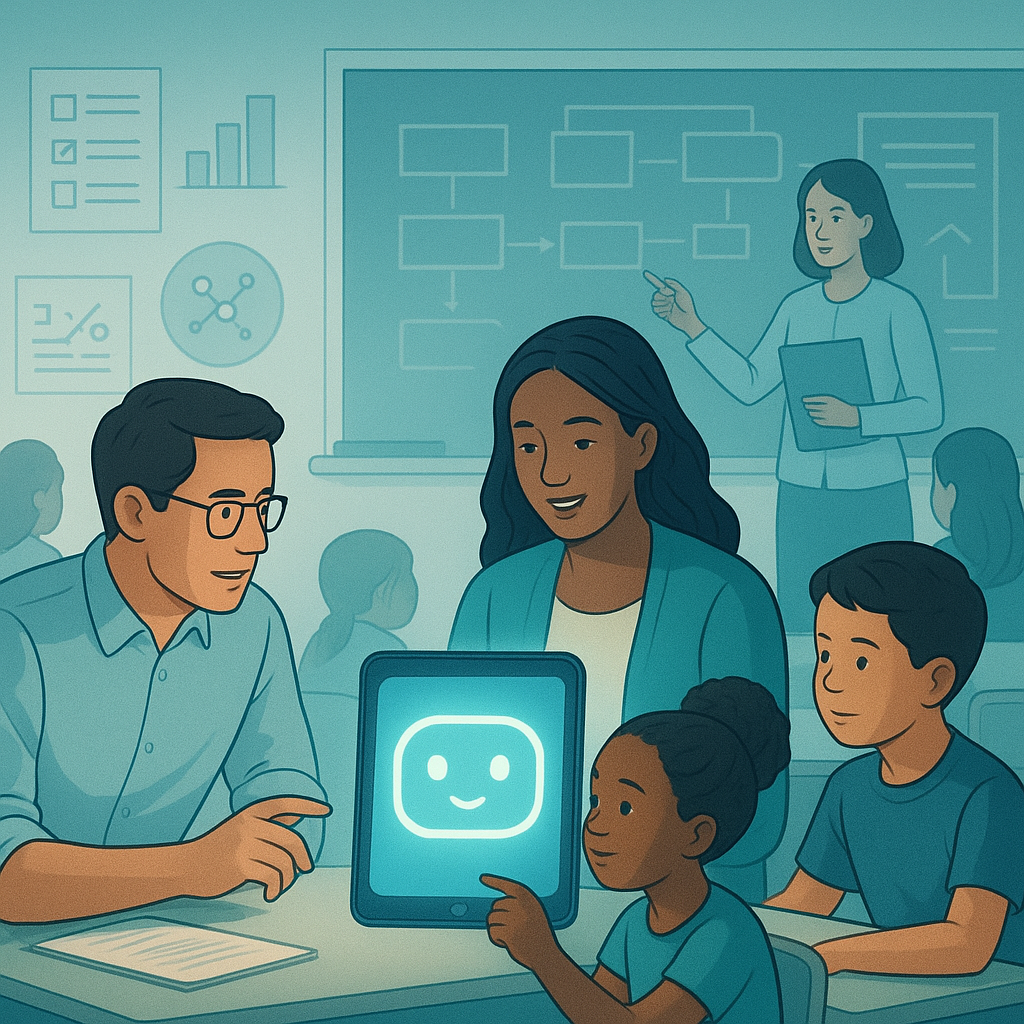
Core benefits of strong teaching and curriculum design
Strong teaching methods and careful curriculum development help AI tools do less damage and more good. That is the honest version. Schools do not need more novelty. They need clearer learning paths, better feedback loops, and fewer wasted minutes. A well-designed curriculum makes that possible.
- Clear learning outcomes: Students know what success looks like, and teachers can test for it directly.
- Better alignment: Lessons, assignments, and assessments point in the same direction instead of wandering around like lost interns.
- Reduced cognitive overload: When content is sequenced well, students can focus on meaning rather than chaos.
- More accurate AI use: Tools can support drafting, drilling, and differentiation only when the instructional frame is already solid.
- Stronger equity: Good curriculum gives more students access to the same essential knowledge, not just those with help at home.
- Improved assessment quality: Teachers can build checks for understanding that reveal what students actually know.
There is a contrarian point worth making. More technology does not always improve equity. In fact, poorly chosen AI can widen gaps, because students who already have strong language and study habits get more benefit from automated feedback than students who need human explanation. That should make any sane administrator pause.
Curriculum development is where schools either gain traction or waste money. A curriculum is not a stack of activities. It is the planned sequence of content, skills, and assessments that moves students through a subject. The best curricula do three things well: they prioritize essential knowledge, they spiral practice over time, and they make assessment meaningful.
When I analyzed schools with high student growth, the common thread was not trendy software. It was disciplined planning. Teachers knew what came next. Students practiced the right things more than once. Review was built in. Teachers used formative checks to adjust instruction before failure hardened.
This is where AI can help in a useful way. It can draft quiz items, suggest parallel examples, and identify patterns in exit tickets. But it should serve the curriculum, not steer it. If a tool cannot explain how it supports the learning sequence, it is probably decoration.
For administrators comparing vendors, a practical checklist helps more than marketing language. Ask whether the tool aligns with standards, whether it supports teachers without extra clicks, and whether it improves a measurable outcome. You can also review curriculum mapping resources and assessment design guidance before signing anything. That is not glamorous. It is wise.

Step-by-step guide to implementing AI without wrecking instruction
Start with the problem.
Not the tool, the problem. That means identifying a real instructional pain point, such as slow feedback on writing, limited differentiation, or weak retrieval practice. If the need is fuzzy, the tool will be useless or worse. Schools that skip this step end up with shiny junk.
- Define the learning goal. State the exact knowledge or skill students should master.
- Map the current gap. What is missing now: content clarity, practice, feedback, or assessment?
- Choose one instructional use case. For example, use AI to generate practice questions, not a hundred unrelated features.
- Set guardrails. Decide what AI may do, what it may not do, and where teacher review is mandatory.
- Pilot with a small group. Measure teacher time, student response, and output quality before any wider rollout.
- Check for bias and errors. AI systems can hallucinate, flatten nuance, or reproduce weak assumptions.
- Measure learning, not usage. Logins are not progress. Completion rates are not mastery.
- Revise the curriculum. If AI reveals weak sequencing or poor examples, fix the curriculum itself.
I have taught long enough to know that implementation fails when adults pretend training is optional. It is not. Teachers need plain, specific guidance on where AI fits into lesson planning, grading, feedback, and student support. Otherwise they will either ignore it or use it badly. Both outcomes are common.
The best pilots are narrow. Use AI for one subject, one grade band, and one measured result. Then compare the output against teacher-created materials. If the AI version saves time and keeps quality high, fine. If it creates more cleanup work, toss it. No sentimentality required.
Schools should also train for ethical use. Students need to know when AI assistance crosses into cheating, how to verify facts, and why original thought still matters. A Christian and Catholic instinct helps here: truth is not optional, and the dignity of the learner requires honesty. Education is not merely output production. It is formation of the whole person.
If your staff needs practical support, the guide to classroom routines and study strategies for retention can help ground implementation in habits that work. For teacher teams, instructional design basics is also worth a look.
Comparison table: Evidence-based teaching vs. AI-first adoption
| Factor | Evidence-based teaching and curriculum | AI-first adoption |
|---|
| Starting point | Learning goals and subject mastery | Product features and vendor claims |
| Teacher role | Central planner and evaluator | Often reduced to monitor and fixer |
| Assessment | Built into the instructional sequence | Sometimes added after the fact |
| Student engagement | Driven by clarity, practice, and success | Often driven by novelty, then fatigue |
| Workload impact | Can reduce rework over time | Can increase cleanup if outputs are weak |
| Risk level | Lower, because methods are tested | Higher, because benefits may be unproven |
| Equity impact | More likely to support access for all | Can widen gaps if students need more human help |
| Long-term value | Stronger retention and transfer | Unclear unless outcomes are measured |
The table is not a sermon. It is a reality check. If AI supports a proven method, good. If it crowds out proven method, bad. Simple enough.
This comparison matters because schools often confuse adoption speed with progress. They are not the same thing. A district can roll out software in a month and still fail to improve reading, writing, or math. Real improvement shows up in student work, classroom discourse, and assessment results, not in a dashboard that looks busy.
If you are exploring course-level change, also review course recommendations and reviews and educational tools and software reviews. Those resources can help you sort serious options from shiny noise.
Common mistakes to avoid
The first mistake is treating AI as the lesson.
That is a trap. AI is a support tool, not the center of gravity. If students remember the software more than the content, the lesson missed the mark.
The second mistake is buying before aligning.
Some schools purchase a platform and then scramble to fit curriculum around it. That is backwards. Curriculum comes first. Tools follow. When the sequence is reversed, teachers spend hours translating the platform into something useful, which is a fine way to waste a budget.
The third mistake is ignoring assessment.
Without formative checks, schools guess. And guessing is expensive. If AI is supposed to improve writing, math fluency, or reading comprehension, then the school should measure those outcomes directly. Usage metrics alone are fluff with a spreadsheet costume.
The fourth mistake is pretending all AI feedback is accurate.
It is not. I have seen systems generate incorrect explanations, shallow rubrics, and repetitive prompts. Teachers must review output. Period. Especially in K-12, where one bad answer can confuse a room full of students.
The fifth mistake is forgetting that students are people.
Good education is not just about performance metrics. It is about the cultivation of mind, habit, and virtue. That idea sounds old because it is old, and it still beats a lot of modern nonsense. Learning should make students more capable and more truthful, not merely more automated.
The sixth mistake is overcommitting to trendy frameworks. A school does not need twenty initiatives. It needs a few well-run practices: clear explanations, guided practice, regular review, and sensible feedback. Add AI only where it improves those practices.
For a deeper look at practical habits, the study strategies that improve retention resource is useful. So is assessment design guidance, because weak assessment makes every other decision fuzzy.
Frequently asked questions
Is AI in education actually improving student learning?
Sometimes, but not automatically. Gains are most likely when AI supports a proven teaching method, such as practice generation, feedback, or targeted review. If the school cannot measure learning gains, the claim is just marketing.
Should teachers use AI to plan lessons?
Yes, with review. AI can speed up drafting and help generate examples, but teachers must verify accuracy, sequence, and alignment. A plan is only useful if it fits the class in front of you.
What matters more: the tool or the curriculum?
The curriculum. Every time. A strong curriculum gives the tool a job; a weak curriculum turns the tool into expensive decoration.
How can schools judge whether an AI product is worth buying?
Ask for evidence tied to learning outcomes, not just user activity. Pilot the product, compare it against teacher-made materials, check workload impact, and demand clear privacy protections.
Final thought
Schools do not need more miracles. They need better judgment.
That sounds harsh, maybe, but it is honest. Teaching works best when method, curriculum, and assessment are lined up with care, and when technology serves that order instead of trashing it. AI can help teachers save time, improve practice sets, and catch patterns they might miss. It can also waste money, weaken instruction, and hide weak thinking behind polished interfaces.
Here is the part that matters most: education is not just about speed. It is about truth, usefulness, and the steady formation of the whole person. If an AI tool cannot support those aims, then it is not innovation. It is distraction with a better logo. And frankly, schools have enough of that already.
For the sake of students, schools should demand proof before praise, evidence before scale, and learning before applause. That is the sensible road. It is also the humane one.