Teaching methods matter.
Teaching Methodologies, Curriculum Development, and Learning Optimization: What Actually Works
Teaching methods matter.
When they are chosen well, pedagogy, curriculum, and assessment work together to produce real learning, not just busy classrooms and glossy slide decks. When they are chosen badly, you get confused students, bloated syllabi, and the usual excuse-making. Frankly, a school can have smart teachers and still miss the point if instruction is built on habits instead of evidence.
Key Takeaways- Teaching methodology is the structure of instruction, not a vibe.
- Curriculum development should start with learning outcomes, then move to assessment, then to activities.
- Learning optimization means reducing waste: wasted time, wasted effort, wasted confusion.
- The best classrooms blend direct instruction, retrieval practice, feedback, and student engagement.
- AI and edtech can help, but they do not replace teacher judgment or human formation.
What is teaching methodology?
Teaching methodology is the set of planned approaches a teacher uses to help students learn, practice, and retain knowledge. It includes direct instruction, inquiry-based learning, project-based learning, discussion, modeling, scaffolding, formative checks, and feedback routines. In other words, it is the design of how learning happens, not just what gets said at the front of the room.
Let's be real. Most people use the word loosely. They call a slide deck a method, or they confuse classroom activity with learning. That is sloppy. A methodology is only useful if it changes student understanding, skill, or behavior in a measurable way. I have seen classrooms full of movement, color, and noise that produced almost nothing on an assessment except confusion. Activity is not achievement.
Good methodology begins with learning outcomes. What should students know, do, or value by the end? That question matters because education is not merely information transfer. It is formation of the whole person, including intellect, judgment, and character. If you skip that, you may still get compliance, but you will not get wisdom.
Researchers such as the U.S. Department of Education's Institute of Education Sciences have repeatedly emphasized evidence-based practices, especially for literacy, feedback, and explicit teaching. See What Works Clearinghouse and U.S. Department of Education policy resources for broad guidance on evidence use. The point is not to worship one method. The point is to choose the right tool for the job.
Here is the kicker: no method works all the time. Direct instruction is excellent for novice learners and foundational knowledge. Inquiry can deepen reasoning once students have enough background to ask good questions. Project-based learning can produce strong transfer when the project is carefully built, but it can also become a time sink if the core content is never secured. Method without purpose is just theater.
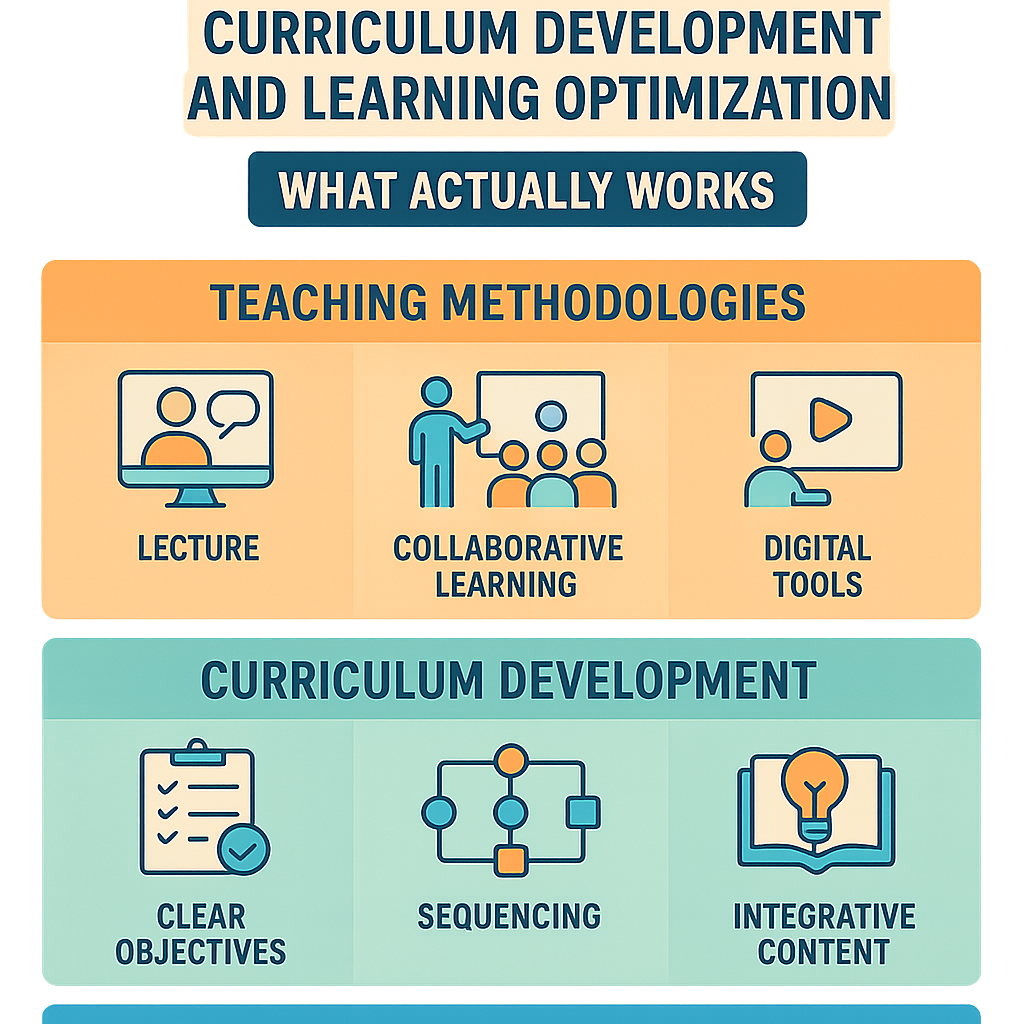
Core benefits of strong teaching methodologies
Strong methodology does not make teaching robotic. It makes learning less random.
- Clearer student understanding: When lessons are sequenced logically, students can connect new ideas to what they already know. That is basic cognitive science, not magic.
- Better retention: Retrieval practice, spaced review, and worked examples improve memory far more reliably than rereading notes. For research summaries, see APA teaching and learning resources.
- More consistent classroom management: A lesson with structure reduces dead time and confusion, which lowers friction. Students behave better when they know what is expected.
- Fairer access to learning: Explicit instruction and scaffolding help students who do not already know how to “figure it out” on their own. That matters for equity, and no, equity does not mean lowering standards.
- Stronger assessment alignment: If teaching methods match the curriculum and assessment, students are not blindsided by the test. That sounds obvious, yet many classrooms act as if it is optional.
- Better teacher decision-making: A teacher who knows why a method works can adapt it instead of copying a trend from a conference handout.
The truth is, a method should reduce confusion, not decorate it. Some people praise “student-centered learning” as if student activity alone equals rigor. It does not. Students learn best when they are guided toward independence, not tossed into the deep end and told to be resilient.
The best evidence-based classrooms combine explicit teaching, guided practice, and frequent checks for understanding. The National Center on Intensive Intervention offers practical examples of instructional support and progress monitoring at Intensive Intervention. That kind of clarity beats vague slogans every time.

Step-by-step guide to curriculum development and learning optimization
Curriculum development is where schools stop guessing and start planning.
I have worked with enough courses to say this plainly: if you build a curriculum from textbook chapters outward, you get bloated content and weak learning. Start with the end first. Then work backward. That old design principle still holds because it respects how students actually learn.
- Define the learning outcomes first
Write down the exact knowledge, skills, and habits students should leave with. Keep them precise. “Understand algebra” is mush. “Solve one-step linear equations and explain the steps aloud” is usable. Precision is not bureaucratic nonsense; it is kindness. - Choose assessment before activities
Decide how you will know students learned the material. Use quizzes, writing tasks, performance tasks, discussion rubrics, or demonstrations. If the assessment is weak, the rest of the course will wobble. Assessment is not punishment. It is information. - Sequence content logically
Begin with prerequisites, then move to applications. Students cannot analyze a poem, solve a proof, or critique an argument if they do not know the basic terms. Build from simple to complex, concrete to abstract, guided to independent. - Plan the instructional mix
Use the right blend of direct instruction, guided practice, collaboration, and independent work. I have seen too many teachers overuse group work because it looks modern. Sometimes a clear explanation is the most respectful thing you can do for learners. - Embed retrieval and spacing
Review old material often. Do it briefly, regularly, and on purpose. Retrieval practice strengthens memory better than passive review, and spaced repetition keeps knowledge from evaporating after the quiz. For a plain-English overview, see The Learning Scientists. - Build in formative assessment
Use exit tickets, mini-whiteboards, quick writes, and short oral checks. These show you what students actually know, not what they pretend to know. That matters because teachers are not mind readers, despite what a few district memos imply. - Revise using evidence
Curriculum is never finished. If students consistently miss one concept, fix the sequence, the examples, or the practice. Good curriculum is a draft that keeps improving. Bad curriculum is a monument to stubbornness. - Use technology sparingly and well
Digital tools can help with practice, accessibility, and feedback, especially for multilingual learners and students with disabilities. But if the tool obscures the content, toss it. The tool serves the lesson, not the other way around.
When I analyzed classrooms that made strong gains, one pattern kept showing up: teachers did fewer things, but they did them with more purpose. That is the real optimization. Not clutter. Not tricks. Just clean design.
Comparison table: evidence-based methodology vs. trendy edtech-first instruction
| Feature | Evidence-based teaching methodology | Trend-driven edtech-first approach |
|---|
| Main goal | Real learning and transfer | Engagement metrics and novelty |
| Planning order | Outcomes → assessment → instruction | Tool first, lesson second |
| Teacher role | Expert designer and guide | Facilitator of whatever the platform suggests |
| Student role | Active thinker with support | User clicking through content |
| Strengths | Clarity, retention, fairness, coherence | Speed, convenience, surface-level interactivity |
| Weaknesses | Requires planning and skill | Often shallow, distracting, or inconsistent |
| Best for | Core academics, skill building, long-term memory | Practice, accessibility, some review tasks |
| Risk | Can feel slower at first | Mistakes activity for understanding |
| Evidence base | Strong, especially for explicit instruction and retrieval | Mixed, often weak if poorly implemented |
Here is the point. A shiny platform does not fix weak curriculum. It can make weak curriculum look expensive.
EdTech can still be useful. The Office of Educational Technology at tech.ed.gov has useful guidance on responsible technology use, privacy, and access. But if a school chooses software before it defines the learning problem, the cart is in front of the horse and everybody knows it.
Common mistakes to avoid
Most teaching problems are not mysterious. They are repetitive.
- Confusing engagement with learning: Students can be busy, amused, and still clueless. Activity is not evidence.
- Overusing learning styles language: The popular “visual, auditory, kinesthetic” story is oversold. Students benefit from multiple representations, yes, but the style label itself is weak. The research does not support the neat little boxes people love to use.
- Skipping foundational knowledge: Higher-order thinking does not float in midair. Students need facts, vocabulary, and procedures first.
- Using too many methods at once: A lesson that tries to be inquiry-based, project-based, discussion-based, and tech-based in one hour usually becomes mush.
- Ignoring formative data: If students are lost, pretending otherwise is not professionalism. It is negligence dressed up as optimism.
- Treating AI as a substitute for thinking: AI can draft, summarize, quiz, and suggest, but it cannot decide what truth is or what students ought to become. Teachers still need to set standards, and students still need to do the mental work.
- Building curriculum around content volume: More pages are not more learning. The goal is depth, not warehouse inventory.
Frankly, one of the worst habits in education is mistaking novelty for improvement. A school buys new software, runs a pilot, gets a few excited testimonials, and then declares victory. Then the test scores barely move, or the gains vanish when the novelty fades. That is not innovation. That is expensive wishful thinking.
When I look at successful programs, I see ordinary discipline: clear explanations, guided practice, feedback, and regular review. Nothing flashy. Everything useful.
Frequently asked questions
What is the best teaching methodology for most students?
The best method depends on the learning goal, but explicit instruction with guided practice is usually the safest default for new content. Once students have a base, discussion, inquiry, and projects can deepen understanding. Start with clarity. Add complexity later.
How do teachers optimize learning without adding more homework?
Use retrieval practice, spaced review, short quizzes, and feedback loops inside class. Homework can help, but it is not the only lever. Better lessons often reduce the need for extra assignments because students actually learn the material during instruction.
Is AI useful in curriculum development?
Yes, with limits. AI can help draft lesson ideas, generate practice questions, summarize sources, and support accessibility. But teachers still need to verify accuracy, align tasks to outcomes, and protect student privacy. AI is a helper, not a judge.
What matters more: curriculum or teaching method?
Both matter, but curriculum gives direction and method gives motion. A weak curriculum can sabotage strong teaching, and a weak method can ruin a sound curriculum. If I had to choose where to fix first, I would start with alignment: outcomes, assessment, and instruction pulling in the same direction.
Education should form more than test-takers.
That is the part people skip when they get obsessed with platforms, charts, and managerial language. A good school helps students know truth, reason well, speak clearly, and act with responsibility. That is not sentimental. It is the point.
When I evaluate teaching methodologies, I do not ask whether they look modern. I ask whether they serve understanding, memory, judgment, and human flourishing. Simple question. Hard standard. The truth is, the most reliable methods are usually the least glamorous: clear explanations, well-sequenced content, frequent checks for understanding, and patient revision. They respect the dignity of the learner because they refuse to waste time pretending confusion is growth.
Curriculum development works the same way. Start with the end. Define what matters. Build with care. Then test, revise, and repeat. Not because schools are factories, but because students deserve more than improvisation. They deserve thoughtful teaching that treats knowledge as something worth having and wisdom as something worth pursuing. That is old advice. It still beats the newest fad.