Teaching methodology is the set of decisions that shapes how students meet learning outcomes, how curriculum is sequenced, and how assessment proves progress...
Teaching methodology is the set of decisions that shapes how students meet learning outcomes, how curriculum is sequenced, and how assessment proves progress. Strong teaching is not theatrical performance. It is disciplined design, clear explanation, and steady practice aimed at real understanding.
Key Takeaways- Pedagogy is not a pile of tricks; it is the method behind learning.
- Good curriculum development aligns content, practice, and assessment.
- Learning optimization depends on retrieval, spacing, feedback, and clarity.
- Most flashy classroom advice fails because it ignores evidence and human limits.
- Education should form the mind and character, not just produce test scores.
What is teaching methodology?
Teaching methodology is the practical framework teachers use to plan instruction, choose materials, sequence lessons, and assess results. It includes direct instruction, inquiry-based learning, collaborative learning, mastery learning, formative assessment, and mixed models that fit the subject and the students. Frankly, the term gets abused. People use it to mean any classroom trend with a glossy handout.
A real methodology answers five plain questions: What should students learn? In what order? How will they practice? How will they show mastery? What happens when they fall short? That is where curriculum, instruction, and assessment meet. When I analyzed lesson plans that actually produced durable learning, the strongest ones were not the most creative. They were the clearest.
Here is the kicker: methodology is not a belief badge. It is a tool for judgment. A history teacher does not teach like a chemistry teacher, because the knowledge structures differ. A novice student does not need the same support as an advanced one. Good teaching respects that difference instead of pretending all learners march through content at the same pace.
Research supports that basic point. The Institute of Education Sciences emphasizes explicit instruction, scaffolding, and frequent checks for understanding in effective teaching practice: What Works Clearinghouse. The Education Endowment Foundation also reports that metacognition, feedback, and structured practice often outperform vague “engagement” talk: EEF Teaching and Learning Toolkit.
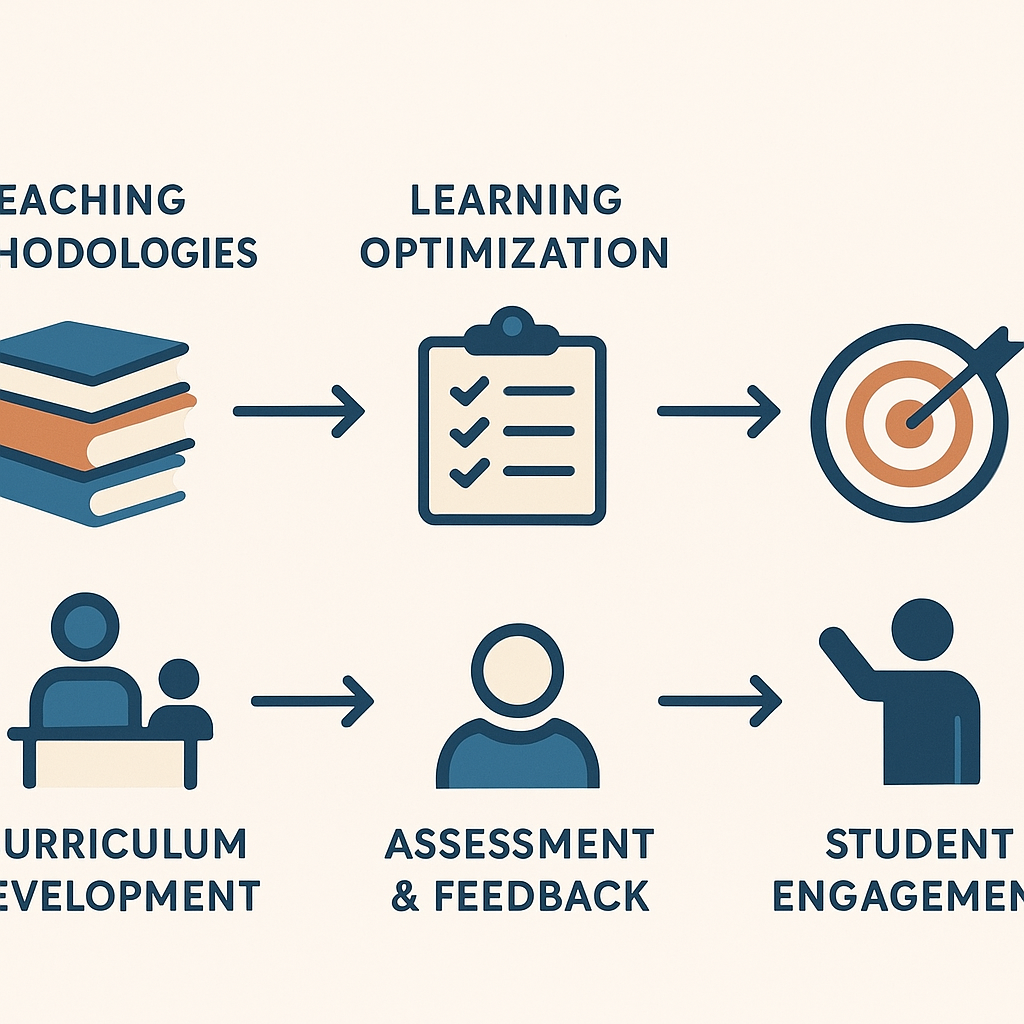
Teaching methodology also has a moral dimension. Education is not merely about throughput. It serves truth, human flourishing, and the formation of the whole person. That matters. If instruction trains students only to pass exams, it has already been reduced. A sound method should sharpen intellect, build habits, and respect the dignity of the learner.
Core benefits of strong teaching methodology
Strong methodology pays off because it reduces confusion, wasted effort, and false confidence. Most schools do not have a motivation problem first. They have a design problem. Students cannot learn what was never clearly taught, sequenced, or practiced.
- Clear learning outcomes improve planning.
Teachers know what success looks like, so lessons stop wandering. That alone saves time and reduces the usual classroom fog. - Better retention comes from structure.
Students remember more when ideas are revisited through retrieval practice, spacing, and elaboration. The Science of Learning literature is blunt about this, and rightly so. - More equitable access is possible.
Good instruction does not assume prior knowledge that some students lack. It builds background knowledge explicitly and gives scaffolds where needed. That is not coddling. It is fairness. - Stronger assessment alignment reduces guessing.
If the curriculum says one thing and the test measures another, students are set up to fail. Alignment matters more than clever slogans. - Higher student engagement can follow, but not as the starting point.
Real engagement usually comes after students experience success, clarity, and challenge in the right order. Not before. - Better teacher judgment develops over time.
A well-designed methodology gives teachers a reliable structure, then leaves room for adaptation. That balance matters more than rigid scripts or unstructured improvisation.
The truth is, many popular teaching ideas are sold as if enthusiasm were enough. It is not. Students need knowledge, guided practice, and feedback. The U.S. Department of Education’s guidance on evidence-based instruction points in that direction, not toward gimmicks: U.S. Department of Education policy and guidance.
If you want a practical companion piece, see this guide on effective learning strategies and this resource on study tips that actually work. Those topics sit right next to methodology because students do not magically know how to learn once a teacher finishes a lesson.

Step-by-step guide to curriculum development and learning optimization
Curriculum development is the art of deciding what matters, in what order, and for what purpose. Learning optimization is what happens when that curriculum is taught in a way that respects memory, attention, motivation, and practice. Keep the two together. Separate them and you get pretty documents with mediocre outcomes.
- Start with the outcome.
Decide what students should know and be able to do by the end. Use specific, observable learning outcomes, not fuzzy wishes. “Understand photosynthesis” is weak. “Explain the role of light, water, and carbon dioxide in photosynthesis” is better. - Map prerequisite knowledge.
I have seen too many curricula that ask students to solve problems before they know the terms, facts, or concepts involved. That is backward. List the background knowledge students need, then teach it intentionally. - Sequence from simple to complex.
Build from basic ideas to layered application. In a good curriculum, each unit earns the next one. If the sequence is scrambled, students burn time relearning what should have been embedded earlier. - Choose the right teaching method for the content.
Direct instruction works well for foundational knowledge and procedures. Inquiry has its place, especially when students already possess core knowledge. Project work can deepen synthesis, but only if the knowledge base is already solid. Let’s be real: “student-centered” does not mean teacher absent. - Embed retrieval practice.
Students should regularly recall facts, steps, and concepts without looking at notes. This strengthens memory far better than re-reading. The American Psychological Association summarizes the evidence on retrieval and durable learning well: APA learning and memory resources. - Use feedback quickly.
Feedback matters most when it is specific and timely. “Good job” is social noise. “Your claim is clear, but your evidence does not support it yet” is useful. - Check for understanding often.
Exit tickets, cold calling, mini-whiteboards, short quizzes, and brief oral responses reveal whether students are actually learning. Waiting until the unit test is a bad habit dressed up as patience. - Review and revise the curriculum.
Curriculum is never finished. If students repeatedly miss a concept, either the sequence is wrong, the explanation is weak, or the practice is insufficient. Fix the plan, not the blame target. - Optimize for attention, not spectacle.
Limit clutter. Reduce cognitive overload. Use worked examples, short segments, and focused practice. The goal is not to entertain students into learning. The goal is to make understanding possible. - Measure more than scores.
Test results matter, but so do habits of thought, writing quality, persistence, and the ability to reason with evidence. Education forms the whole person. If your curriculum ignores that, it is smaller than it should be.
For practical course design ideas, this overview of course recommendations and reviews can help you spot programs with real structure instead of marketing fog. And if you need digital support, this guide to educational tools and software is a useful companion.
Comparison table: strong methodology vs trendy improvisation
The biggest competitor to sound teaching methodology is not another method. It is ad hoc teaching—whatever sounds good this week. That approach is cheaper, louder, and usually weaker.
| Feature | Strong teaching methodology | Ad hoc trendy instruction |
|---|
| Planning | Begins with learning outcomes and prerequisites | Begins with activities and vibes |
| Curriculum | Sequenced, aligned, revisable | Patchy, inconsistent, hard to audit |
| Assessment | Matched to what was taught | Often measures something else |
| Student support | Scaffolds built in | Depends on teacher instinct |
| Retention | Uses retrieval, spacing, feedback | Relies on exposure and hope |
| Equity | Reduces hidden knowledge gaps | Assumes students already know the code |
| Teacher workload | Front-loaded design, then easier delivery | Constant reinvention, more chaos |
| Results | Clearer mastery and better transfer | Unstable learning and shallow recall |
The comparison is not subtle. One approach is designed for learning. The other is designed for appearances. If you are serious about learning strategies or building a tutorial-style guide, the same rule applies: structure beats noise.
For more on evidence-based classroom practice, the OECD’s education work also gives a sensible overview of how systems compare and why quality instruction matters: OECD Education.
Common mistakes to avoid
Most teaching mistakes are predictable. That is the annoying part. They keep repeating because people confuse motion with progress.
- Mistaking activity for learning.
A busy classroom is not necessarily a learning classroom. Students can be chatting, coloring, clicking, and still not know the material. I have seen it too many times. - Using “learning styles” as a master key.
The evidence for matching instruction to fixed visual, auditory, or kinesthetic styles is weak. Students benefit from varied representations and practice, not from being sorted into tiny personality boxes. - Teaching without clear knowledge sequencing.
When content is dumped into units without prerequisite logic, students lose the thread. They may survive the test and forget everything by Friday. - Overusing project work before foundation building.
Projects can be excellent. They can also become expensive confusion machines. If students lack core knowledge, the project turns into flailing with poster board. - Neglecting assessment alignment.
If you teach analysis but test memorization, or teach vocabulary but test open-ended synthesis, the system is broken. Not the student. The system. - Treating feedback as praise.
Positive vibes are not feedback. They are pleasant, sure, but they do not tell a student how to improve. - Assuming technology fixes weak curriculum.
Software can help with practice, pacing, and access. It cannot rescue a fuzzy learning goal. Bad design in a fancy wrapper is still bad design. - Ignoring character formation.
The most serious error is educational reductionism. If schooling produces cleverness without honesty, diligence, or humility, it has missed something essential.
Here’s what nobody tells you: the best teachers are often less flashy than the worst conferences. They make concepts plain. They anticipate confusion. They revise. They insist on truth, because students deserve more than decoration.
If you want a deeper dive on classroom habits, read study tips and resources for learners. They help students support the instructional design they receive.
Frequently asked questions
What is the best teaching methodology?
There is no single best method for every subject or age group. Direct instruction, inquiry, discussion, and practice each have a place. The best methodology is the one that matches the learning outcome, the students’ prior knowledge, and the demands of the subject.
How do you develop a curriculum that works?
Start with clear outcomes, identify prerequisite knowledge, sequence content carefully, and align assessment to instruction. Then test it in the classroom and revise based on what students actually do, not what the spreadsheet promised.
What improves learning the most?
Retrieval practice, spaced review, clear explanations, timely feedback, and well-sequenced content usually produce strong gains. In plain English, students learn more when they are asked to recall, apply, and revisit knowledge rather than just re-read it.
Are student-centered methods better than teacher-led methods?
That depends on the task. Teacher-led methods often work better for introducing new material, while student-centered approaches can be useful once learners have enough background knowledge to explore independently. The mistake is turning either one into a religion.
Final thought
Good teaching is disciplined love of truth. That sounds old-fashioned because it is, and because it still works.
When I look at the classrooms that produce real learning, I do not see magic. I see teachers who know their content, sequence it with care, and respect the limits of working memory and attention. I see curricula that build knowledge instead of scattering it. I see assessment that tells the truth instead of flattering the adults in the room.
That is the standard. Not trendiness. Not noise. Not another laminated framework with a catchy acronym.
Education should do more than move information from one head to another. It should shape judgment, strengthen discipline, and help young people grow into responsible, thoughtful human beings. That is a better measure of success than a dashboard full of cheerful numbers.
If your teaching methodology does that, keep going. If it does not, fix it. The students are waiting, and they deserve the real thing.