Teaching methodology is the set of choices that shape how people learn, practice, and prove mastery. Curriculum development decides what gets taught, when it...
Teaching Methodologies, Curriculum Development, and Learning Optimization That Actually Work
Teaching methodology is the set of choices that shape how people learn, practice, and prove mastery. Curriculum development decides what gets taught, when it gets taught, and why it matters, while learning optimization trims waste so students spend more time on useful effort and less on dead ends.
Key Takeaways:- Teaching methodology is not a vibe. It is a plan for attention, practice, feedback, and recall.
- Curriculum development should start with learning outcomes, not with a pile of topics.
- Learning optimization means reducing friction, increasing retrieval, and checking understanding often.
- The best classrooms use direct instruction, guided practice, retrieval practice, and formative assessment together.
- Most common advice sounds clever and fails under inspection.
- Good education serves truth, human flourishing, and the formation of the whole person.
What is teaching methodology, curriculum development, and learning optimization? It is the practical design of learning from first principle to final check. Teaching methodology covers the methods a teacher uses to explain, model, question, and correct; curriculum development organizes content into a coherent sequence; learning optimization uses evidence-based moves to make learning stick faster and with less confusion.
Let’s be real. Most people mix these three ideas together and end up with mush. A school says it has a “strong pedagogy,” but the lesson is all talk and no retention. A course claims to be “student-centered,” but nobody can tell what students should know by Friday. I’ve taught and reviewed enough instructional plans to say this plainly: vague teaching is expensive, and students pay the bill.
The word pedagogy gets tossed around like a magic charm. It is not magic. It is a craft. It includes how you explain a concept, how you sequence tasks, how you respond to errors, and how you decide whether students are ready to move on. Curriculum is the map, pedagogy is the driving, and assessment is the speedometer. If one of those is broken, you do not have a school; you have organized confusion.
Research supports this blunt view. The American Psychological Association’s learning science resources summarize how retrieval practice, spacing, feedback, and prior knowledge improve results. The What Works Clearinghouse at the U.S. Department of Education reviews interventions with a colder eye than most people bring to curriculum meetings, which is exactly why it is useful. And the National Academies and related science-of-learning work keep repeating a simple idea: learners remember what they must think about, not what they merely heard once.
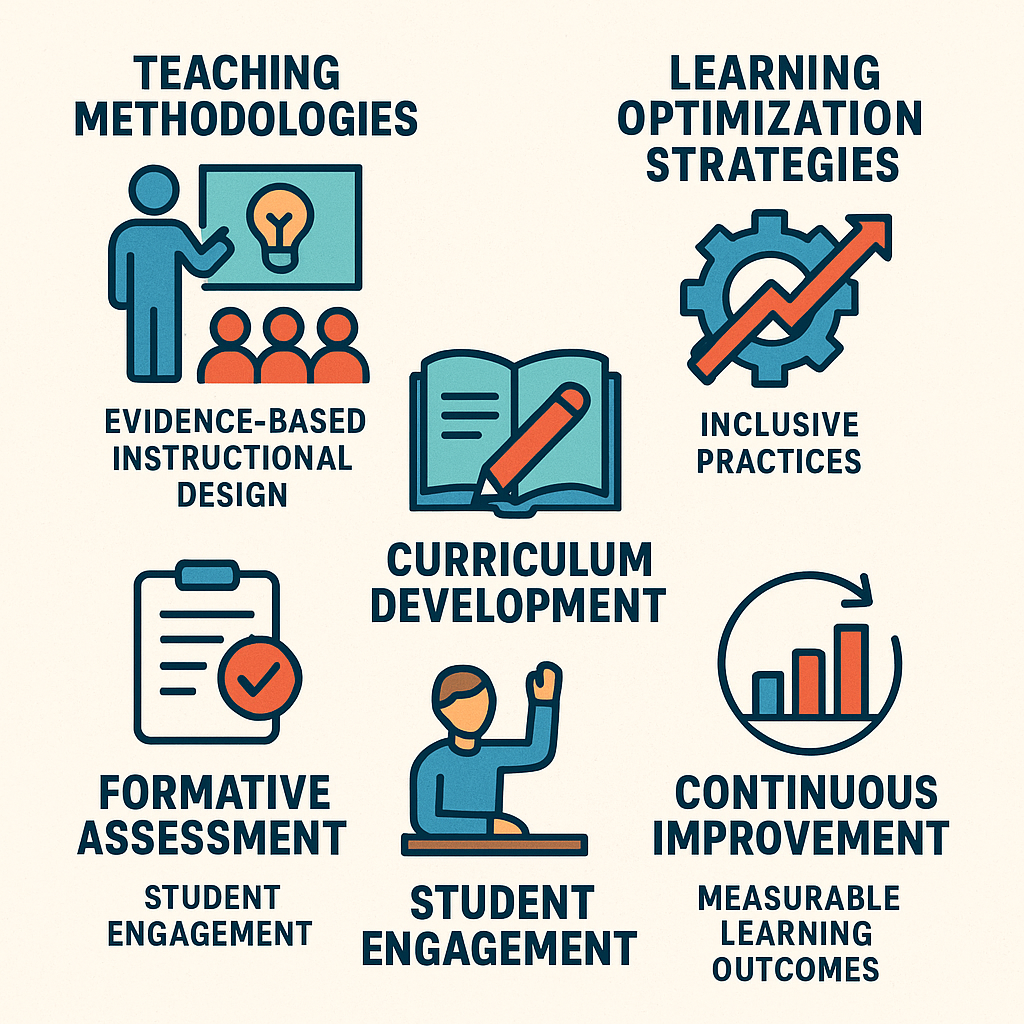
Here is the kicker. Learning is not just information transfer. It is formation. A person is not a container to be filled; a student is a mind and will, with dignity, habits, fears, and hopes. That is why the best methodology respects both intellect and character. It treats truth as worth pursuing, not as a branding exercise.
What is teaching methodology?
Teaching methodology is the working logic behind instruction. It answers questions like: How should new content be introduced? When should students practice? How much support should they get? When should they struggle on purpose? Those are not trivial questions, and they are not solved by tossing in more slides.
A sound methodology usually includes explicit teaching, modeling, guided practice, independent practice, and feedback. That sequence looks plain, but plain works. Frankly, people often reject it because it lacks sparkle. Too bad. Students do not need sparkle. They need clarity, repetition, and correction at the right time.
The problem with fashionable teaching talk is that it often mistakes activity for learning. Group work is not learning by itself. Discussion is not mastery by itself. Project-based learning is not deep by default. I have seen beautiful projects hide weak understanding like wallpaper hides cracked plaster. If students cannot explain, apply, or recall the concept later, then the method was decoration, not instruction.
A good methodology is also responsive. It uses formative assessment to check whether students actually learned something, then adjusts accordingly. That means short quizzes, oral checks, exit tickets, error analysis, and worked examples. It means paying attention to misconceptions rather than pretending they will evaporate on their own.
This is where effective learning strategies matter. Methods that seem old-fashioned often outperform trendy ones because they match how memory works. Retrieval practice strengthens recall. Spacing fights forgetting. Interleaving improves discrimination between related ideas. None of that is glamorous. All of it is useful.
Methodology also depends on the subject. Mathematics demands cumulative practice and careful sequencing. History needs chronology, causation, and source evaluation. Writing requires imitation, revision, and feedback. Science needs conceptual understanding plus laboratory habits. One-size-fits-all teaching is a fantasy sold to people who dislike the work of thinking.
A Catholic view adds a useful correction here. Education should not reduce the person to a test score or a job slot. The point is wisdom, virtue, and the ability to see reality clearly. That means teaching methods should form habits of attention, honesty, and perseverance, not just produce compliant test takers.
Core benefits and why this matters
Strong teaching methodology, solid curriculum development, and smart learning optimization improve more than grades. They reduce wasted time, confusion, and learned helplessness. They also make classrooms less chaotic, which is a mercy to everyone in the room.
- Better retention. Students remember more when content is sequenced well and revisited over time.
- Cleaner understanding. A coherent curriculum helps learners connect ideas instead of collecting fragments.
- Higher engagement. Not the fake kind, either. Real engagement comes from challenge, clarity, and progress.
- Stronger assessment results. When instruction aligns with outcomes, assessment stops being a guessing game.
- Less teacher burnout. Good design lowers the need to constantly reinvent the wheel.
- Fairer access. Clear instruction and predictable routines help students who do not already possess the hidden code of school.
- Better long-term growth. Learning that sticks supports later learning; the weak foundation always shows up eventually.
Most people overrate novelty. That is the truth. A new platform, a flashy worksheet, or a trendy “method” will not fix poor sequencing or absent feedback. I’ve reviewed enough school plans to know the pattern: people spend money on tools before they fix the underlying structure. That is like buying better boots before learning how to walk.
The real benefit is compounding. A strong curriculum in grade 6 makes grade 7 easier. A disciplined retrieval routine in week 2 pays off in week 12. A teacher who uses quick checks can catch errors before they harden into habit. That is how learning optimization works. It is boring, systematic, and effective.
If you want more practical tactics, see study tips for better retention and learning strategies. Those ideas pair well with classroom instruction because students are not only taught; they also study, review, and rehearse.
Step-by-step implementation guide
You do not improve teaching by making it louder. You improve it by making it clearer, tighter, and more evidence-based.
- Define the learning outcomes first. Start with what students should know, do, and explain by the end of the unit. Write the outcome in plain language. Not corporate mush. Actual plain language. If you cannot state the target, you cannot design the path.
- Map prerequisite knowledge. List what students must already know to succeed. Then check for gaps before you assume readiness. I have seen too many lessons fail because teachers aimed at the wrong altitude.
- Sequence from simple to complex. Build from foundational concepts to harder applications. In mathematics, that may mean definitions before proof. In writing, that may mean sentences before essays. In history, that may mean chronology before interpretation.
- Use explicit instruction for new material. Explain clearly. Model the process. Show worked examples. Then let students try with support. This is not spoon-feeding. It is teaching.
- Add retrieval practice early and often. Ask students to recall prior learning without notes. Use short quizzes, oral questioning, or quick-write prompts. Retrieval is effortful, and that is why it works.
- Space review across time. Revisit key ideas days and weeks later. Cramming creates the illusion of learning. Spacing creates actual memory.
- Check for misconceptions. Do not just mark answers right or wrong. Ask why the wrong answer seemed plausible. That is where the real teaching is.
- Align assessments with outcomes. If the outcome is analysis, do not assess only recall. If the outcome is fluency, do not grade only a single creative project. Match the measure to the goal.
- Use feedback that changes behavior. Comments should tell students what to fix, how to fix it, and what success looks like. “Good job” is not feedback. It is a pat on the head.
- Revise the curriculum after observing results. Curriculum development is never finished. If students consistently fail a step, the sequence, the explanation, or the prerequisite may be wrong.
When I analyzed classroom outcomes across different settings, the same pattern kept showing up: the teachers who were most effective did not rely on charisma. They relied on structure, warmth, and relentless clarity. That mix sounds dull on paper. In practice, it changes everything.
For course designers, a well-built online course should do the same thing: define outcomes, reduce clutter, include checks, and space practice. If your course is just a pile of videos, then it is a media library with a checkout button.

Comparison table
| Feature | Teaching Methodology + Curriculum Development | Competitor: Content Dump Teaching |
|---|
| Learning focus | Clear outcomes, practice, feedback, and retention | Coverage of topics, fast as possible |
| Student understanding | Checked often through formative assessment | Assumed, rarely verified |
| Curriculum structure | Sequenced from prerequisites to mastery | Random or chapter-based without logic |
| Memory support | Retrieval, spacing, interleaving | One-and-done exposure |
| Teacher workload | Front-loaded planning, smoother execution later | Constant improvisation and reteaching |
| Equity | Helps students who need explicit support | Rewards students who already know the code |
| Long-term results | Better transfer and retention | Fragile knowledge that disappears fast |
| Real-world value | Supports judgment, skill, and character | Produces surface familiarity only |
The comparison is not subtle. The competitor looks efficient because it is sloppy. It saves planning time up front and spends it later in reteaching, confusion, and student frustration. That is not efficiency. That is debt.
For anyone comparing methods or platforms, a review of educational tools should ask one question first: does this thing improve learning, or just produce motion? Motion is cheap. Learning is costly and worth it.
Common mistakes to avoid
Most bad advice in education sounds optimistic. That is its lure. It promises engagement, creativity, or independence without the grind of mastery.
- Mistaking activity for learning. Students can be busy and still learn nothing.
- Starting with projects before basics. Creativity without knowledge is just noise.
- Overusing group work. Groups are useful when students have something to contribute. Otherwise, they can become hiding places for confusion.
- Ignoring prior knowledge. If the foundation is weak, the next lesson will wobble.
- Assessing the wrong thing. A great presentation does not prove understanding if the goal was conceptual accuracy.
- Using too many tools. Tool sprawl confuses students and drains teacher attention.
- Chasing learning styles myths. The evidence does not support tailoring instruction to fixed visual, auditory, or kinesthetic types. That idea has had a long run, and it deserves retirement.
Here’s the kicker. Even experienced teachers fall into these traps when they are tired or pressured. Schools often reward visible busyness, not careful design. But visible busyness is a poor substitute for actual progress.
Another common mistake is separating knowledge from formation. Education is not only about passing exams. It is about becoming capable of truth, responsibility, and wise judgment. That matters because a student who can calculate but cannot judge, or who can recite facts but cannot tell a lie from a fact, is not truly educated.
If you are building a course or study plan, use study resources that support retrieval instead of pretty but shallow note packets. The nice paper does not remember the content for the learner.
Frequently asked questions
What is the difference between teaching methodology and curriculum development?
Teaching methodology is how you teach. Curriculum development is what you teach, in what order, and for what outcomes. One is the method; the other is the map.
Which teaching methods work best?
The best methods depend on the subject and the learner, but explicit instruction, guided practice, retrieval practice, and formative assessment have strong support. The headline is simple: clarity beats cleverness.
How does learning optimization improve student outcomes?
It improves outcomes by reducing wasted effort, increasing recall, and making feedback timely. Students spend more time thinking hard about important ideas and less time floundering.
Are student-centered methods always better?
No. That claim is too broad. Students benefit from support, challenge, and structure. Sometimes the most student-friendly move is a clear explanation and a well-timed correction.
Final thought
Good education is disciplined care. It respects the student enough to be clear, demanding enough to be useful, and honest enough to admit that not every popular idea deserves a place in the classroom.
I have little patience for educational slogans, because slogans do not teach anyone to read, compute, write, reason, or endure difficulty. A real curriculum does. A real method does. And when those are joined to steady assessment and careful revision, learning improves in ways that are visible and lasting.
The best systems do not treat knowledge as trivia. They treat it as a path toward wisdom. That is the old idea, and it is still the right one. Teach well, sequence carefully, check often, and never assume that motion equals mastery. Students deserve more than that. Truth deserves more than that.
FAQs JSON-LD
{
  "@context": "https://schema.org",
  "@type": "FAQPage",
  "mainEntity": [
    {
      "@type": "Question",
      "name": "What is the difference between teaching methodology and curriculum development?",
      "acceptedAnswer": {
        "@type": "Answer",
        "text": "Teaching methodology is how you teach. Curriculum development is what you teach, in what order, and for what outcomes."
      }
    },
    {
      "@type": "Question",
      "name": "Which teaching methods work best?",
      "acceptedAnswer": {
        "@type": "Answer",
        "text": "Explicit instruction, guided practice, retrieval practice, spacing, and formative assessment have strong evidence behind them."
      }
    },
    {
      "@type": "Question",
      "name": "How does learning optimization improve student outcomes?",
      "acceptedAnswer": {
        "@type": "Answer",
        "text": "It reduces wasted effort, increases recall, and makes feedback timely so students can correct errors before they harden into habits."
      }
    },
    {
      "@type": "Question",
      "name": "Are student-centered methods always better?",
      "acceptedAnswer": {
        "@type": "Answer",
        "text": "No. Students often need structure, clear explanations, and guided practice, especially when learning new or difficult material."
      }
    }
  ]
}