Teaching works best when <strong>method</strong>, <strong>curriculum</strong>, and <strong>assessment</strong> fit together. Fancy labels do not fix weak...
Teaching Methodologies, Curriculum Development, and Learning Optimization: What Actually Works in Classrooms
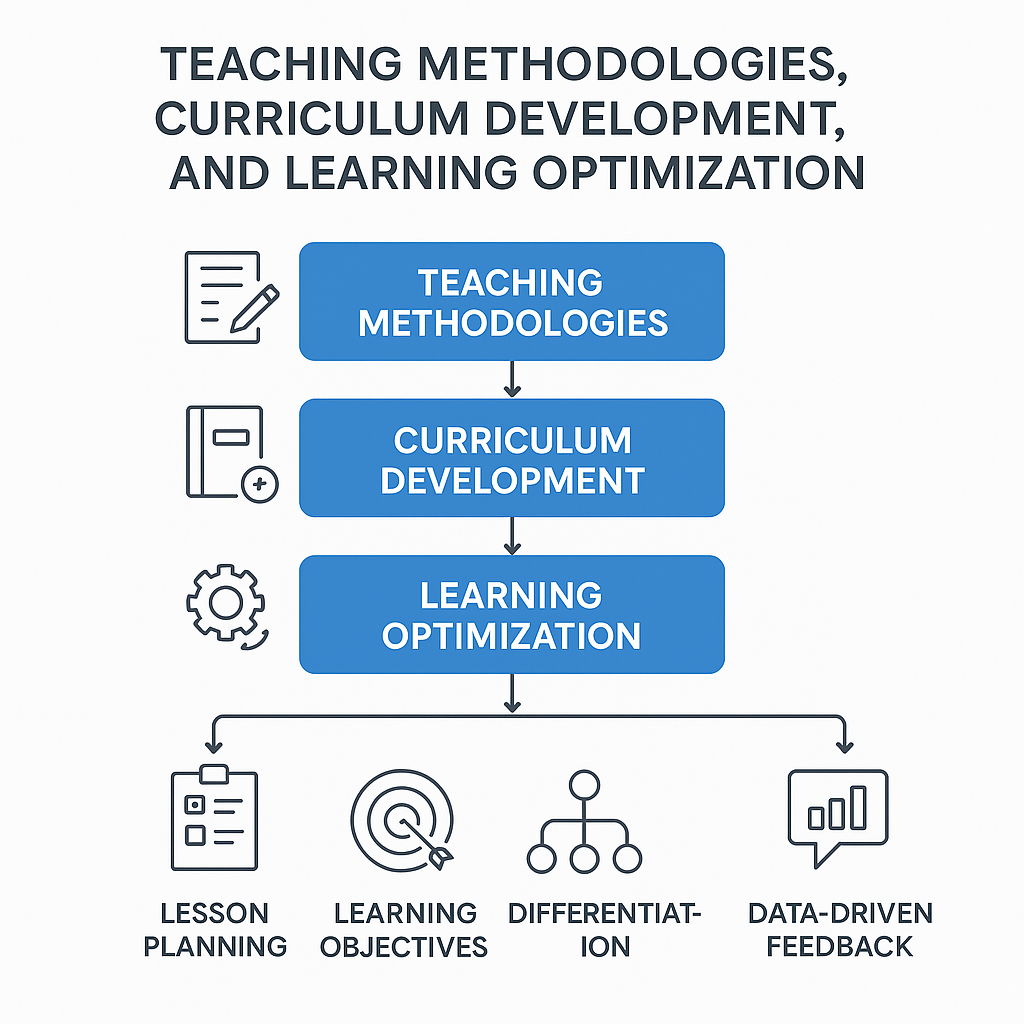
Teaching works best when method, curriculum, and assessment fit together. Fancy labels do not fix weak instruction, and most buzzwords are just that—noise. The real job is simple: help students think, remember, and apply knowledge with clarity, structure, and steady feedback.
Key Takeaways- Teaching methodology is not a costume. It is the daily pattern of how students meet content.
- Curriculum development should start with outcomes, then build backwards.
- Learning optimization depends on practice, retrieval, feedback, and pacing.
- Student engagement matters, but attention alone is not learning.
- Good instruction forms both competence and character, because truth matters and people are not machines.
What is teaching methodology?
Teaching methodology is the organized way a teacher delivers content, checks understanding, and adjusts instruction in real time. It includes direct instruction, inquiry-based learning, discussion, modeling, cooperative learning, and formative assessment. I have seen schools overcomplicate this until the room smells like jargon and dead PowerPoint slides. Frankly, a teaching method is only as good as the learning it produces.
The point is not to pick a fashionable label and stick it on the wall. The point is to choose methods that fit the subject, the age group, the prior knowledge of students, and the desired learning outcomes. A method for teaching fractions is not the same as a method for teaching literary analysis, and pretending otherwise is silly. Research from the American Psychological Association and the Edutopia summary of effective teaching both point toward clarity, structure, feedback, and active processing. That is not glamorous, but it is solid.
A strong methodology also respects human dignity. Students are not data points to be pushed through a machine. They are persons who learn through effort, repetition, correction, and encouragement. That is old wisdom, and still true.
Why does this matter?
Because methods shape habits, and habits shape minds.
Core benefits and importance
- Better retention: Students remember more when they retrieve, explain, and apply content instead of only hearing it.
- Stronger transfer: Well-structured instruction helps learners use knowledge in new settings.
- Cleaner assessment: When method matches goals, assessment becomes fairer and more useful.
- More equity: Clear scaffolds help students with weaker background knowledge keep up.
- Less chaos: Teachers who plan methodically waste less time re-teaching basic steps.
- More meaningful engagement: Students lean in when they can see progress, not just activity.
Here is the kicker: engagement is not the same as amusement. A class can be loud, colorful, and busy while learning almost nothing. I have watched plenty of “interactive” lessons collapse under the weight of their own cute activities. If you want real engagement, give students a task that matters, explain why it matters, and make them work at the edge of their ability.
Curriculum development, done properly, begins with the end in mind. That means defining learning outcomes, sequencing content from simple to complex, and aligning assessment with the stated goals. Wiggins and McTighe popularized this backward design approach, and for good reason. It reduces random teaching. It also forces honesty. If the test asks for analysis but the lessons only ask for recall, the curriculum is broken.
A good curriculum has three bones:
- Learning outcomes: what students should know and do.
- Scope and sequence: what comes first, what comes later, and why.
- Assessment plan: how you know the learning actually happened.
The best curricula also build human flourishing, not merely employable skills. That means attention to truth, discipline, language, and responsibility. A school should produce capable graduates, yes, but also decent ones.
Step-by-step implementation guide
- Define the goal.
Start with precise outcomes. Do not write vague mush like “students will understand history.” What does that mean, exactly? Can they explain cause and effect, compare sources, or evaluate bias? Be specific. - Diagnose prior knowledge.
I have analyzed enough classrooms to say this bluntly: most teaching fails because teachers assume students know more than they do. Use diagnostic questions, quick checks, or short pre-assessments before you teach the new material. - Select the right method.
Direct instruction works well for new content, while discussion and inquiry work better after students have enough background knowledge. Do not make beginners discover everything from scratch. That is not noble. It is inefficient. - Sequence the curriculum.
Break large topics into manageable steps. Build from concrete examples to abstract principles. Space practice over time, and revisit key ideas often. This is where many schools get sloppy. - Add retrieval practice.
Students should recall information without looking at notes. Low-stakes quizzes, short writes, flashcards, and oral questioning all help. The memory boost is real, not marketing fluff. - Use feedback quickly.
Feedback should be timely, specific, and tied to the task. “Good job” is not feedback. Neither is a red pen avalanche that nobody reads. - Measure and adjust.
Review assessment data, student work, and classroom observations. If a unit flops, fix the unit. Do not blame the weather, the phones, or the moon.
If you need help choosing study and memory practices for learners, see this guide on student memory strategies and this overview of learning science research. Both make the same basic point: students learn through effortful recall, spacing, and feedback. Simple. Not easy.
Comparison table
| Feature | Teaching Methodology + Curriculum Alignment | Big Competitor: Trend-Driven Instruction |
|---|
| Focus | Learning outcomes, sequence, assessment | Novelty, appearance, quick attention |
| Planning | Intentional and evidence-based | Reactive and often improvised |
| Student learning | Deep understanding and transfer | Short-term participation |
| Assessment | Aligned to goals | Often disconnected from goals |
| Teacher workload | Less re-teaching over time | More confusion and cleanup |
| Long-term value | Builds knowledge and habits | Fades when the trend fades |
Common mistakes to avoid.
- Confusing activity with learning. A busy room is not proof of understanding. Students can cut, color, click, and still learn almost nothing.
- Treating “learning styles” as gospel. The evidence for matching instruction to fixed styles is weak. A lot of people repeat this idea because it sounds nice, not because it works.
- Ignoring prior knowledge. If students lack foundation, advanced tasks become theater. Pretty theater, maybe, but still theater.
- Overloading the curriculum. More content is not better. It can choke comprehension.
- Skipping formative assessment. Without regular checks, teachers guess. Guessing is a bad hobby in education.
- Using one method for everything. Different subjects require different approaches. Reading instruction is not identical to science labs or math practice.
Frequently Asked Questions
What is the best teaching methodology?
There is no single best method for every subject or group. Direct instruction, guided practice, discussion, and inquiry all have uses. The best choice depends on the lesson goal and the students’ prior knowledge.
How does curriculum development improve learning?
It aligns goals, content, assessment, and pacing. That alignment makes instruction clearer and more coherent, which improves retention and performance.
Why is student engagement important?
Engagement keeps students mentally present, but it must lead to thinking and practice. Attention is useful only when it results in real learning.
What is the role of assessment in learning optimization?
Assessment shows whether students are learning, where they are stuck, and what needs to change. It is not just grading. It is information.
Final thought
Teaching is a moral act before it is a technical one. A curriculum can be polished and still hollow if it does not serve truth, wisdom, and the good of the student. The schools that last are usually the ones that teach clearly, expect much, and treat learning as formation, not performance. That has always been the case, and I doubt it will change any time soon.