Teaching methodology is the practical system behind classroom decisions, curriculum development is the design of what students learn and in what order, and...
Teaching Methodologies, Curriculum Development, and Learning Optimization: What Actually Works
Teaching methodology is the practical system behind classroom decisions, curriculum development is the design of what students learn and in what order, and learning optimization is the disciplined work of making instruction stick. These three pieces are inseparable. Weak teaching turns content into noise. Weak curriculum turns good teaching into confusion. Weak optimization wastes time.
Key Takeaways- Teaching methodologies shape how students meet content, practice skills, and show understanding.
- Curriculum development gives instruction sequence, coherence, and measurable goals.
- Learning optimization focuses on retention, transfer, and student engagement.
- Popular ideas often sound smart but fail under real classroom conditions.
- Good teaching serves truth, human flourishing, and the formation of the whole person.
What is Teaching Methodology, Curriculum Development, and Learning Optimization?
Teaching methodology is not a bag of tricks. It is the pattern of choices a teacher makes about explanation, practice, feedback, grouping, pacing, and assessment. Curriculum development is not a binder full of worksheets. It is the deliberate construction of standards, units, lessons, sequences, and checks for understanding so students build knowledge in a sane order. Learning optimization is the careful tuning of attention, memory, retrieval, and feedback so students actually remember and use what they learn.
Frankly, people use these terms loosely. They talk about “best practices” as if one shiny method fits all subjects, all ages, and all schools. It does not. I have analyzed classrooms where the teacher had energy, but the sequence was broken; students looked busy, but they had little to show for it. That is the dirty little secret of education: activity is not learning.
A solid methodology is tied to learning outcomes. If the outcome is writing a clear argument, then students need models, guided practice, revision, and feedback. If the outcome is solving equations, then they need worked examples, deliberate practice, and error correction. If the outcome is scientific reasoning, then they need evidence, lab routines, and careful questioning. Pedagogy without purpose is theater.
Curriculum development provides the spine. It asks what comes first, what comes next, and what must be revisited. Without that spine, teachers are left improvising from day to day, which sounds flexible but usually means gaps. A strong curriculum includes content knowledge, skill progression, assessment alignment, and room for adaptation. It respects the dignity of the learner by not treating students like cluttered storage bins.
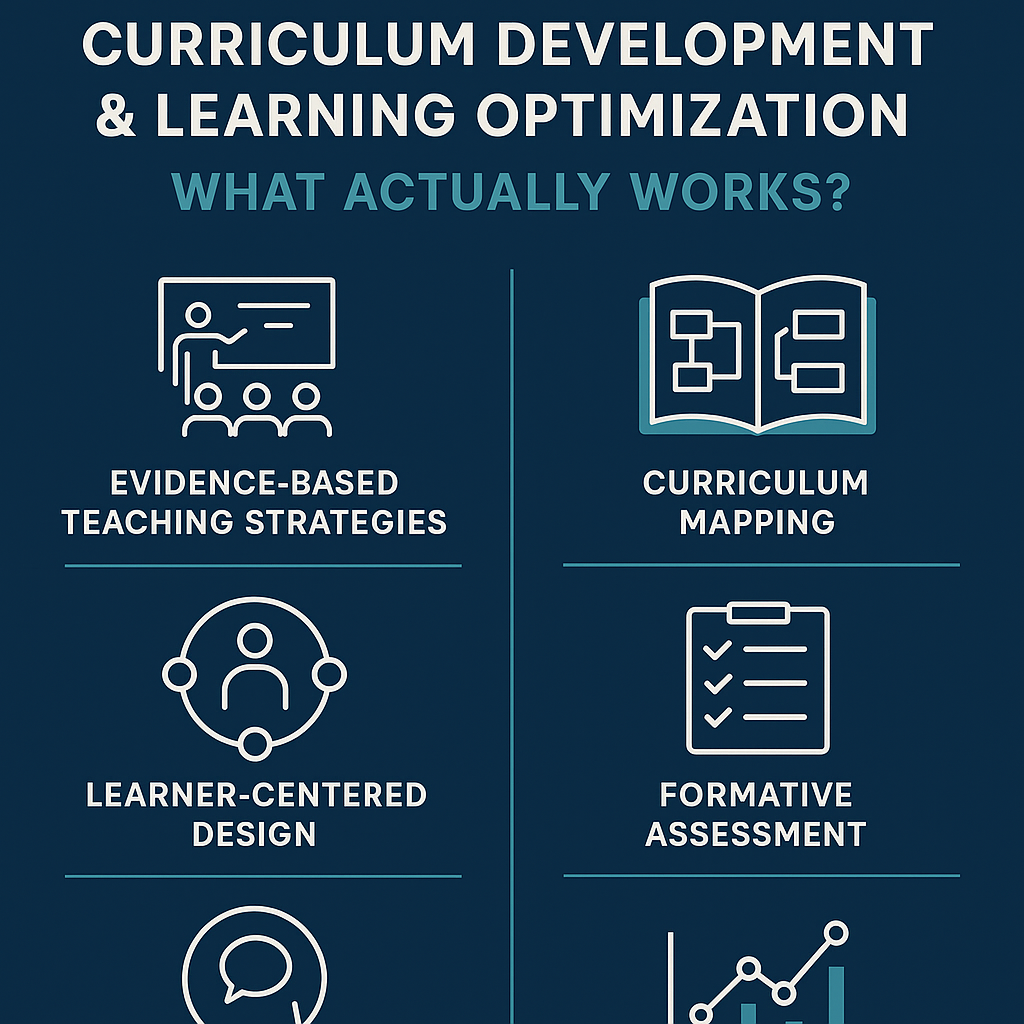
Learning optimization is where the research gets useful. Retrieval practice helps memory. Spaced repetition beats cramming. Dual coding can help when used honestly, not as a magic slogan. Feedback matters, but only if students can act on it. The point is simple: students should not merely encounter information; they should process it, retrieve it, and use it.
The best approach also forms character. That part gets ignored too often. Education is not just job prep or test prep. It should train attention, patience, responsibility, and a love of truth. That is not sentimental fluff. It is the whole point.
If you want a useful framework for study support, the article on retrieval practice is worth a look, and so is Carnegie Mellon’s teaching resources for practical course design. For teacher-facing materials, the Institute of Education Sciences has more substance than most trend pieces.
Core Benefits and Importance
Good teaching methods matter because they make learning visible. When students can explain, apply, and revisit knowledge, you know instruction is working. When they cannot, you have evidence, not excuses.
- Better retention: Students remember more when lessons include retrieval, spacing, and varied practice.
- Clearer sequencing: Curriculum development reduces accidental gaps and repeated dead ends.
- Stronger engagement: Students pay attention when the task makes sense and the pace is reasonable.
- Fairer assessment: Aligned tests and tasks measure what was taught, not what was guessed.
- More efficient instruction: Teachers stop wasting time on bloated activities that produce little learning.
- Improved transfer: Students apply knowledge in new settings instead of freezing when the format changes.
Here’s the kicker. Many schools chase novelty because it looks progressive. I do not buy that. A glittery lesson is not a good lesson. Evidence from cognitive science keeps pointing to a few plain methods: clear explanation, practice, feedback, and spaced review. That is not glamorous, but it works.
There is also a moral dimension. If learning is meant to serve truth and human flourishing, then teachers owe students clarity, not confusion. A curriculum should not merely entertain. It should build competence, judgment, and habits of mind. That includes especially the students who are easy to overlook, the quiet ones, the struggling ones, and the ones in rural districts who may have fewer resources but no smaller right to serious instruction.
This is where structural limits matter. Teachers in rural schools often work with thin budgets, limited staffing, and fewer AI tools or enrichment options, yet they still have to meet the same expectations. That means methodology and curriculum design have to be lean, intentional, and realistic, not filled with consultant nonsense.
If you are looking for related classroom support materials, the guide on formative assessment is useful, and the U.S. Department of Education’s family resources can help parents understand how schoolwork supports learning at home. Those are plain sources, not miracle cures.

Step-by-Step Implementation Guide
Start with the end. That sounds obvious, yet many classrooms still begin with a chapter and hope for the best. I’ve seen enough of that to be skeptical. Good instruction begins with what students must know, do, and produce by the end of a unit.
- Define the learning outcomes. Be precise. A vague goal like “understand ecosystems” is weak. Better: “Students will explain energy flow in a food web and support claims with evidence.” Clear outcomes make planning and assessment much easier.
- Map the curriculum backwards. Decide what students need before they can meet the outcome. Then arrange lessons in a sequence that builds from basic knowledge to application. This is not busywork. It is how you prevent cognitive overload and weird gaps.
- Choose the teaching methodology that fits the content. Direct instruction works well for new or complex material. Inquiry works better when students already have enough background knowledge to ask decent questions. Discussion can deepen interpretation, but only if students have something worth discussing. Group work is fine when roles are clear. Otherwise, it becomes a social club.
- Build in checks for understanding. Ask for short answers, quick sketches, low-stakes quizzes, and verbal explanations. Do not wait until the exam to discover everyone is lost. That is not assessment. That is negligence dressed up as surprise.
- Use retrieval practice early and often. Revisit old material at the start of a lesson, at the end of a unit, and after a delay. The memory system likes repetition with spacing. Cramming creates the illusion of mastery and then leaks away.
- Give feedback that can be used. “Good job” is not feedback. Neither is a paragraph of vague criticism. Show the error, name the fix, and give another attempt. Students improve when they can act on the response.
- Differentiate without lowering the bar. Students do not all need the same path, but they do need the same intellectual dignity. Offer scaffolds, examples, sentence frames, and extra practice where needed. Do not confuse support with dilution.
- Measure results honestly. Look at assessment data, class discussion, written work, and student confidence. If the method is not producing learning outcomes, change it. Pride is expensive.
- Revise the curriculum each term. Cut weak material. Tighten unclear instructions. Move content that comes too late. Curriculum development is never done. It should be edited like good prose, not protected like a fossil.
- Protect attention. Limit distractions, reduce clutter, and keep the task visible. Students learn better when the room, the materials, and the expectations all point in the same direction.
If you are looking for study-support material, the guide on study skills is useful, and the Department of Education’s homework help offers plain advice. No magic, just work.
Comparison Table
Below is the blunt comparison most districts should have made years ago.
| Approach | Strengths | Weaknesses | Best Use Case |
|---|
| Teaching methodologies + curriculum development + learning optimization | Coherent sequence, clearer outcomes, stronger retention, better assessment alignment | Requires planning, data review, and teacher skill | Schools that want actual learning, not just activity |
| Trend-driven classroom improvisation | Flexible, fast to launch, looks innovative in meetings | Gaps in knowledge, inconsistent assessment, weak retention | Short-term novelty and occasional enrichment |
The first approach is boring in the best way. It is stable, repeatable, and measurable. The second often flatters adults more than it helps children. Students do not need performance art. They need structure, clarity, and repeated exposure to important ideas.
Common Mistakes to Avoid
Most mistakes come from overconfidence. Teachers are blamed for structural problems, then sold useless fixes by people who never had to teach a room full of sleepy teenagers on a Friday afternoon. Let’s be real.
- Mistaking engagement for learning. Students laughing does not mean students are learning. A lively class can still fail to produce durable knowledge.
- Overusing group work. Collaboration has value, but only when students have enough prior knowledge and clear roles. Otherwise, one student works and three coast.
- Ignoring assessment alignment. If the lessons teach analysis but the test asks for recall, or vice versa, the curriculum is broken.
- Treating AI as a substitute for pedagogy. AI can help with drafting, differentiation, and practice generation, but it cannot replace judgment, relationships, or moral formation. Anyone promising that is selling fog.
- Packing the curriculum too tightly. More content is not always better. If students rush past basics, they never gain the confidence to handle harder work.
- Forgetting review. Without spacing, students forget. Then teachers call them “unmotivated” when the real problem is memory decay.
- Using one method for every subject. Reading literature, solving algebra, learning history, and doing lab science do not all require the same approach.
I have a low opinion of oversimplified advice like “just make it student-centered.” Centered on what? On noise? On preference? On whatever feels good this morning? Good curriculum development serves the truth of the subject and the needs of the learner. It does not grovel before fashion.
Some schools also chase technology without asking whether it improves understanding. A tool is only as useful as the instructional purpose behind it. For a sober look at tech claims, see EdSurge’s education news and the evidence summaries from the Education Endowment Foundation. They are not perfect, but they are better than slogans.
Frequently Asked Questions
Q1: What is the difference between pedagogy and curriculum development?
Pedagogy is the method of teaching, while curriculum development is the design of what is taught and in what sequence. One focuses on delivery; the other focuses on structure. You need both, or the whole enterprise starts wobbling.
Q2: Which teaching methodology works best?
There is no single winner. Direct instruction, inquiry, discussion, modeling, and practice all have their place. The right choice depends on subject matter, learner readiness, and the learning outcome. Anyone claiming one method solves everything is usually selling something.
Q3: How do I optimize learning without adding more homework?
Use retrieval practice, spaced review, short quizzes, worked examples, and clear feedback. Reduce wasted time in class. Homework should reinforce learning, not punish children for being children.
Q4: Why is curriculum alignment so important?
Because students should be assessed on what they were actually taught. Alignment keeps teaching, practice, and assessment pointed at the same target. Without that, data becomes misleading and teachers get blamed for the wrong thing.
Final Thought
Good teaching is not flashy. It is faithful.
That may sound old-fashioned, but old-fashioned is not the same as stale. In education, the old wisdom often survives because it respects the grain of the human mind: attention must be earned, memory must be revisited, and understanding must be built. When I look at strong classrooms, I rarely see gimmicks carrying the day. I see teachers who know their subject, sequence their curriculum with care, and treat students as persons capable of growth.
That matters. Students are not production units, and schools are not factories. A sound approach to teaching methodologies, curriculum development, and learning optimization should help young people become wiser, steadier, and more capable of serving others. That is a better aim than chasing the next fad. It is also the only one worth the trouble.
If you build around truth, sequence, and disciplined practice, the results compound. Slowly, then all at once.