Teaching methodology is the system behind how learning happens. Curriculum development sets what gets taught, when, and why. Learning optimization makes both...
Teaching Methodologies, Curriculum Development, and Learning Optimization: What Actually Works in Real Classrooms
Teaching methodology is the system behind how learning happens. Curriculum development sets what gets taught, when, and why. Learning optimization makes both of them work better for real students, not just for neat theory. The best classrooms use all three together, because facts alone do not form a person, and neither does sentiment without structure.
Key Takeaways- Teaching methodology shapes how teachers present content and guide practice.
- Curriculum development decides sequence, scope, and learning outcomes.
- Learning optimization improves retention, transfer, and student engagement.
- Most flashy advice is weak; evidence and careful design matter more.
- Good education forms both competence and character.
What is teaching methodology?
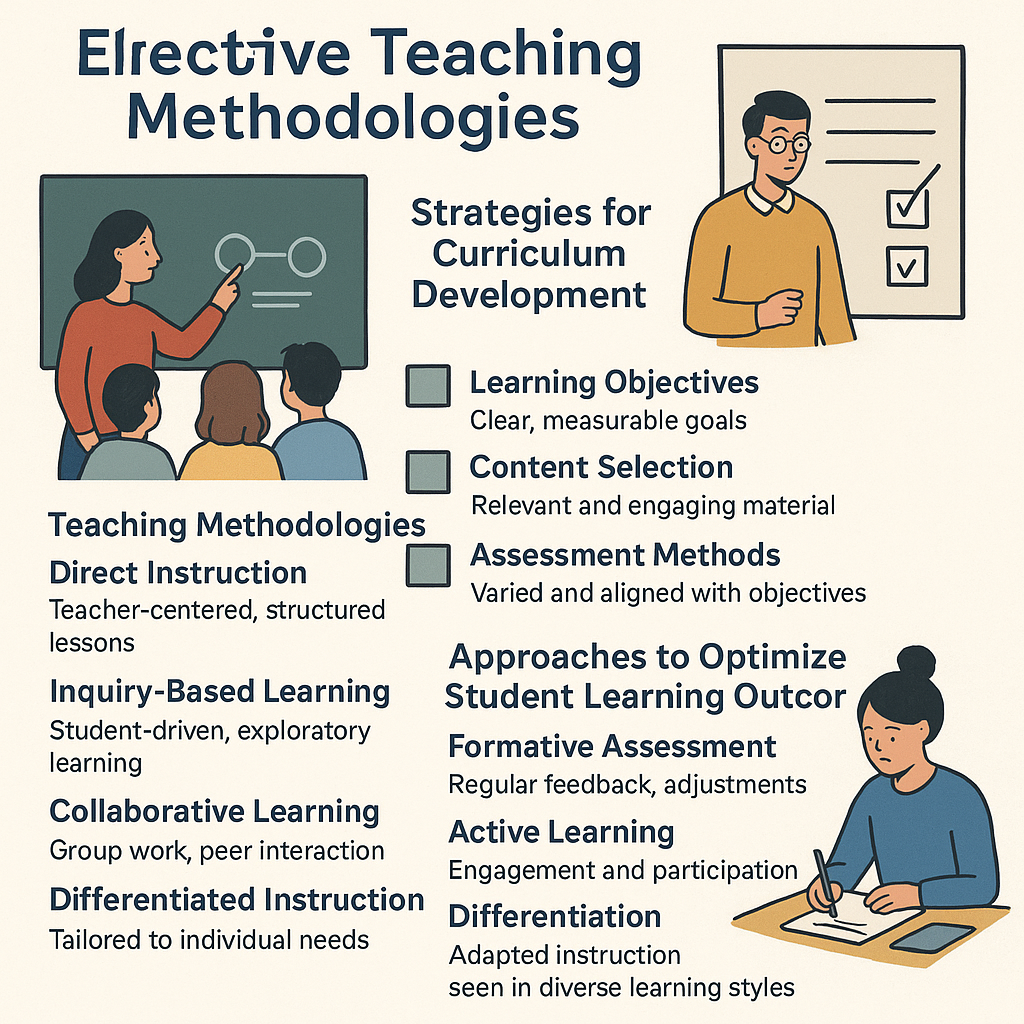
Teaching methodology is the practical method a teacher uses to help students learn, remember, and apply knowledge. It includes direct instruction, guided practice, discussion, inquiry, cooperative learning, and feedback. A solid method is not a classroom gimmick. It is a repeatable way to move learners from confusion to competence.
Frankly, people talk about teaching like it is a performance. It is not. It is disciplined work. In my view, after examining research and classroom results, the best methodology is the one that matches the content, the age of the learner, and the goal of the lesson. A phonics lesson does not need the same structure as a debate on civic duty. That should be obvious, yet a lot of advice ignores it.
The evidence is clear on one point: teacher clarity matters. Students learn more when the teacher models the skill, checks for understanding, and gives corrective feedback. Hattie’s synthesis on visible learning points in that direction, and so does plain experience. You can read more about evidence-based instruction in What Works Clearinghouse and the Education Endowment Foundation teaching and learning toolkit.
Methodology also includes classroom management, pacing, and the wise use of time. The room matters. The learner matters. The teacher matters most of all, because no technology or shiny framework can replace judgment. That is the part people forget.
A good methodology respects the dignity of the student. That may sound lofty, but it is practical. If each child is a person, not a data point, then teaching must aim at understanding, habit, and growth, not mere compliance. Education should serve truth and human flourishing. That is not sentimentality. It is the whole job.
Core benefits of strong teaching methodology, curriculum development, and learning optimization
Strong teaching methods and curriculum design improve learning in ways that are measurable, not mystical. Here is the kicker: the benefits show up in comprehension, motivation, and long-term memory, but only when the system is coherent.
- Better learning outcomes: Students are more likely to master essential skills when objectives, lessons, and assessments line up.
- Higher retention: Spaced review, retrieval practice, and deliberate checks for understanding help knowledge stick.
- Clearer curriculum alignment: Teachers know what comes before and after each unit, which reduces gaps and repetition.
- More efficient instruction: Time is not wasted on activities that look busy but produce little learning.
- Stronger student engagement: Purposeful tasks and active participation beat passive note-taking most days.
- Improved equity: Clear instruction and scaffolded practice help more students access the same high expectations.
- Better character formation: Good teaching does more than deliver content; it shapes habits of attention, patience, and responsibility.
Let’s be real, not every popular method deserves applause. “Learning styles” has been oversold for years, and the evidence for matching instruction to visual, auditory, or kinesthetic types is weak. The more useful question is simpler: what evidence shows this method improves learning for this content and these students? The Center for Education Policy Analysis and many reviews of instructional research keep returning to the same theme—clarity, practice, and feedback outperform fluff.
A strong curriculum also helps teachers. It reduces improvisation fatigue and protects against random content drift. When I analyzed lesson plans across multiple grade levels, the common failure was not lack of effort. It was poor sequence. Teachers were working hard, but the material was arranged like a junk drawer.

The best systems support the whole child. That means knowledge, yes, but also moral formation, self-control, and attention. A curriculum that ignores virtue eventually produces clever confusion. That is not a result anyone should celebrate.
Step-by-step guide to implementation
If you want better teaching and learning, stop collecting slogans and start building a system. The steps below are simple. Simple is good. Simple works.
- Define the learning outcomes first
Start with the end in mind, but not in a fuzzy corporate way. Ask what students should know, do, and understand by the end of the unit. Write outcomes in plain language. If you cannot explain the goal clearly, the lesson plan is already wobbling. - Map the curriculum sequence
Put the skills in order. Some concepts must come before others, and some need repeated exposure. I have seen too many programs throw advanced tasks at students before they have mastered the basics. That is not rigor. It is confusion wearing a necktie. - Choose the right teaching method for the task
Use direct instruction when the content is new or complex. Use discussion when students have enough background to think critically. Use guided inquiry when the goal is problem solving and transfer. Do not use group work just because it feels modern. Group work is only useful when the structure is tight. - Plan assessment before instruction
Assessment should not be an afterthought. Decide how you will know whether students learned the material. Use exit tickets, short quizzes, oral checks, writing tasks, and performance assessments when appropriate. Good assessment reveals learning; bad assessment merely produces scores. - Build in retrieval and spacing
Students forget quickly. That is a fact, not an insult. Revisit key ideas over time, not once. Retrieval practice and spaced repetition are among the most reliable learning strategies in the research literature, and the American Psychological Association has useful material on how memory works in learning. - Differentiate without lowering standards
Support students with scaffolds, examples, sentence frames, and guided practice. Keep the learning target constant. Lowering expectations is not inclusion. It is surrender. - Review, revise, and remove waste
After a unit, ask what worked, what stalled, and what students still cannot do independently. Then revise the curriculum. Most programs never die because they are bad. They die because no one bothers to prune them. - Use technology as a tool, not a master
Digital tools can aid feedback, practice, and access, but they cannot replace judgment. If a tool does not improve learning, drop it. Every extra click has a cost.
Teachers should also study student behavior patterns. Which tasks trigger attention? Which instructions cause drag? Which supports reduce errors? When I taught and observed classrooms, the answer was usually boring but useful: clear directions, short practice cycles, and timely correction beat elaborate activity every time.
For study and classroom support, see our related guides on effective note taking strategies, spaced repetition for memory, and how to build a unit plan.
Comparison table: traditional content delivery vs. optimized teaching and curriculum design
A lot of arguments pretend this is a fight between “traditional” and “modern.” That is lazy. The real question is whether instruction is coherent and effective. Still, comparison helps.
| Feature | Traditional Content Delivery | Teaching Methodology + Curriculum Optimization |
|---|
| Goal | Cover material | Achieve learning outcomes |
| Lesson order | Often textbook-driven | Sequenced by prerequisite skills |
| Student role | Mostly passive | Active, guided, and accountable |
| Assessment | End-of-unit tests only | Frequent checks for understanding |
| Feedback | Delayed or vague | Timely and specific |
| Adaptation | Limited | Built-in scaffolds and review |
| Retention | Uneven | Strengthened by retrieval and spacing |
| Engagement | Often low | Purposeful and structured |
| Teacher workload | Repetitive but inefficient | Upfront planning, less waste later |
| Long-term result | Surface coverage | Durable understanding and transfer |
The biggest competitor to good instructional design is not another method. It is randomness. Randomness in sequence, randomness in assessment, randomness in expectations. That is what students pay for later.
Common mistakes to avoid
Most teaching mistakes come from good intentions and bad habits. That makes them harder to kill. Still, we should try.
- Confusing activity with learning: A classroom can be noisy, lively, and completely unproductive. That is not a success story.
- Overusing group work: Collaboration is useful only when students have a clear task and enough preparation. Otherwise, one child works and three coast.
- Ignoring prerequisite knowledge: New content lands badly when students do not have the background needed to understand it.
- Treating assessment as punishment: Assessment should inform instruction, not just rank students.
- Chasing trends: Every few years a new buzzword shows up, gets applause, and then quietly fails in practice.
- Using technology for novelty: A digital worksheet is still a worksheet. A projector does not magically improve thinking.
- Neglecting practice: Understanding is fragile without rehearsal. Students need chances to recall, explain, and apply.
- Assuming motivation will appear by magic: It will not. Purpose, clarity, and success build motivation better than speeches do.
The truth is, people often want educational silver bullets. There are none. Anyone who tells you otherwise is selling something. Evidence-based approaches from sources like OECD Education Research and Innovation consistently show that the boring stuff—structured instruction, clear feedback, and curriculum coherence—usually wins.
Another mistake is forgetting formation. Schools are not factories for information. They are places where attention, conscience, and judgment are trained. A child is not merely a future worker. That is a narrow and foolish way to think. Learning should help a person become wise, capable, and good.
Frequently asked questions
What is the difference between teaching methodology and curriculum development?
Teaching methodology is how content is taught. Curriculum development is what content is selected, ordered, and assessed. One is the method. The other is the map. You need both.
Which teaching method works best?
There is no single best method for every topic. Direct instruction works well for explicit knowledge. Inquiry and discussion work better when students already have some foundation. The best teachers match method to purpose, not fashion.
How do you optimize learning without overwhelming students?
Use short lessons, frequent review, guided practice, and clear feedback. Break complex tasks into chunks. Keep expectations high, but remove unnecessary clutter. Students learn better when the path is clear.
Why does curriculum alignment matter so much?
Because misalignment causes waste. If lessons, materials, and assessments do not point to the same outcomes, students get mixed signals. Alignment keeps instruction honest. It also makes teaching less chaotic.
Final thought
The best teaching is not flashy. It is faithful.
That may sound old-fashioned, but old-fashioned is not the same as outdated. The strongest classrooms I have seen were built on patience, clear standards, and respect for the student’s mind. They did not confuse noise with progress. They did not treat children as bundles of preferences. They assumed that truth can be taught, that habits can be shaped, and that every learner deserves serious work.
When I look at education honestly, I keep coming back to the same point: good teaching is an act of service. It serves understanding. It serves discipline. It serves the future of a child who will one day make choices that matter. That is why curriculum cannot be random, and why learning optimization is not a luxury. It is part of doing the job well.
If we want schools that actually educate, we should stop chasing clever tricks and start building systems that help students think, remember, and grow. That is not flashy. It is right.